
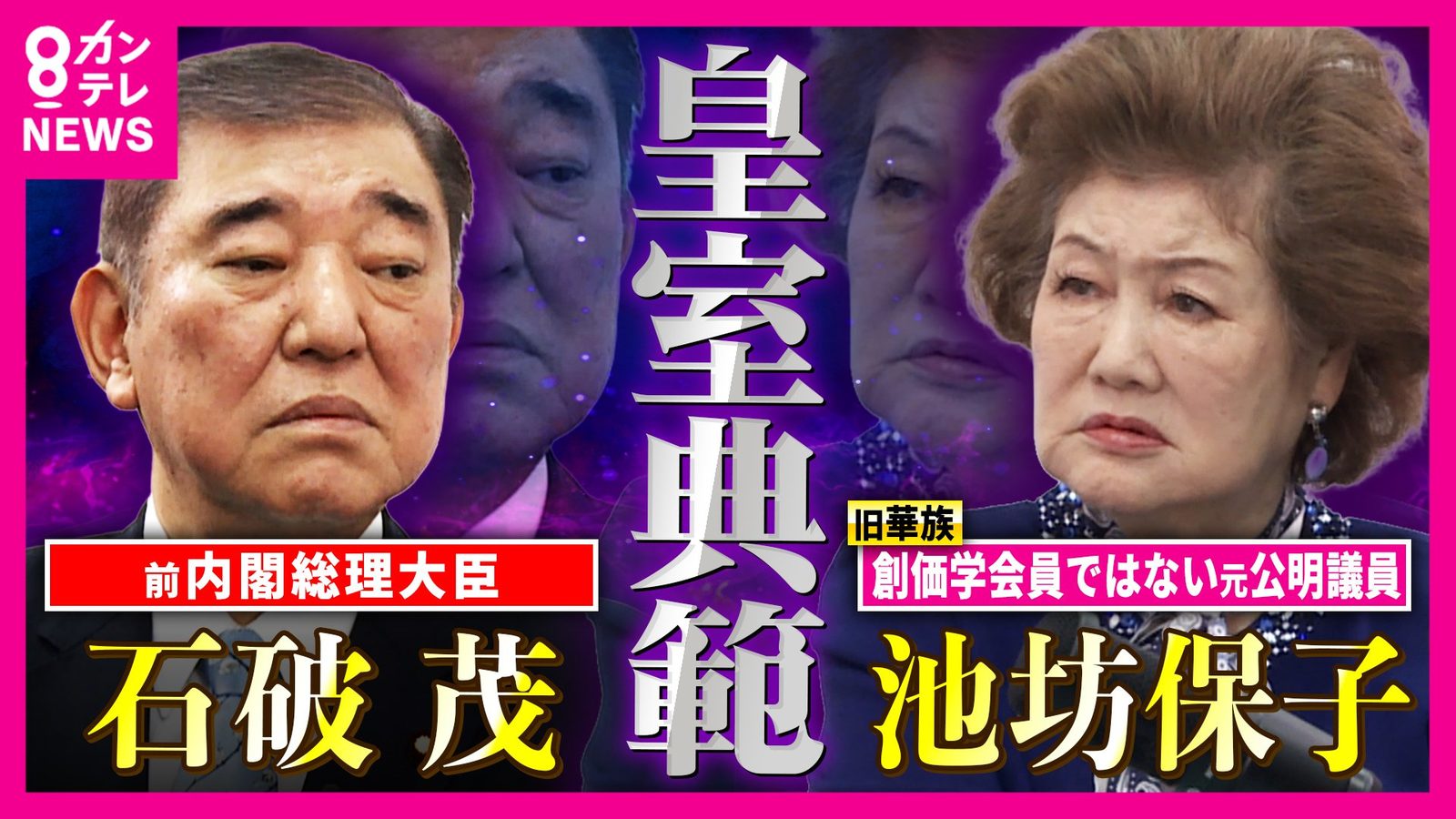
Former Prime Minister Shigeru Ishiba has said he wants the revised Imperial House Law amended again, arguing the public was never consulted on a law that took effect last month and left the question of a female or female-line emperor unresolved, FNN Prime Online reported.
Ishiba made the remarks on a Kansai TV online program on November 2, in a conversation with former lower house member Yasuko Ikenobo. Ikenobo is from the former peerage, the Meisei family, and her mother was a cousin of Empress Kojun, Emperor Naruhito's grandmother.
The revised law took effect on the 24th of last month. It was passed in July to secure the number of imperial family members, which had become a pressing problem.
What the revision changed
The law made two main changes. A woman born into the imperial family can keep her imperial status after she marries. The children of an adopted male-line heir from a former princely house can inherit the throne.
- A female imperial family member keeps her status after marriage. Princess Aiko, the eldest daughter of the Emperor and Empress, could therefore remain in the imperial family if she married. Any children she had could not inherit the throne.
- A male-line man from a former princely house can be adopted into the imperial family. The adopted man himself cannot inherit the throne, but descendants born to him in future can.
Since the Meiji era, only a male descendant in the male line, a man who traces his descent to the emperor through his father, has been able to inherit the throne.
"The public's will was not heard"
Ishiba pointed to Article 1 of the Constitution, which states that the Emperor's position derives from the will of the people, in whom sovereign power resides. He said that will had not been sought this time.
“There was an election in February this year, but I do not know a single candidate who talked to the public about the Imperial House Law.”Shigeru Ishiba, former prime minister
He said he felt deep regret that politicians had set aside the public's will to protect themselves. Speaking about the Emperor's position at all, he said, was too awe-inspiring, so the debate was avoided.
“I have a very strong sense of regret that we have neglected the public's will for our own self-preservation.”Shigeru Ishiba, former prime minister
He also said his proposal of benefits over tax cuts had won no support at all.
"No answer to why it is wrong"
Ikenobo said she found it odd that a woman who stayed in the imperial family would be married to a commoner and have commoner children, a household in which husband and wife did not stand on the same footing.
“They are husband and wife in the same family, yet they are not in the same position. I think that is a distorted way for a family to be.”Yasuko Ikenobo, former lower house member
Ishiba said the revision had not directly addressed whether a woman or a female-line descendant should be allowed to reign. There is no answer, he said, to why it should not be allowed, and the question needs proper debate.
A pledge to try again
Ishiba recalled accompanying the Emperor and Empress on their state visit to the Netherlands and Belgium in June as chief attendant. He said watching them work for world peace and the happiness of the people at close range left him in awe.
“At the same time, did we politicians really speak to the sovereign people? I have a strong sense of regret that we did not.”Shigeru Ishiba, former prime minister
Ikenobo asked him to listen to what each person thinks and to change the law under the next government. Ishiba replied that he would do his best.