
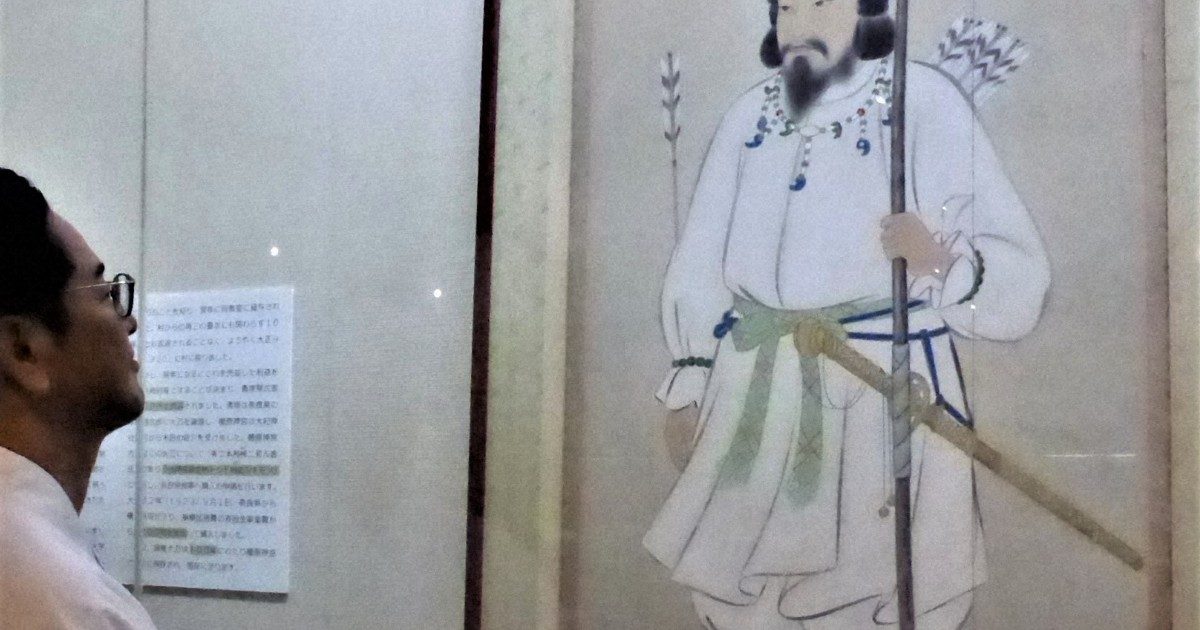
The idea of an unbroken imperial line is a modern political construct rather than an ancient fact, a Mainichi Shimbun column argues, tracing it to the Meiji government's effort to weld a new nation together around the throne.
The column opens with a line its author learned as a student of Japanese political history more than 30 years ago: the history of the imperial system is a history of the throne being used for politics. The author, who does not recall the book or the person it came from, writes that examples are plentiful.
The first is the Meiji government. In the mid-19th century the Tokugawa shogunate was forced to open the country under pressure from the Western powers and grew weak. The government that replaced it had felt the imperialist rule that might makes right.
A nation built in a hurry
To stand against the powers, Japan had to abandon the patchwork of semi-autonomous domains and build a centralized modern nation-state quickly. The government dissolved the domains, made education compulsory and put conscription and taxation systems in place.
Imposing those reforms on a population only just becoming "citizens" required a single national heart, loyal to the government and grounded in a shared morality. Hirobumi Ito, a leader of the Meiji government and later Japan's first prime minister, reasoned as much.
Ito toured Europe in 1882 and the following year to study constitutional systems. There he concluded that religion served to bind a nation together. But in his view, neither Japan's native Shinto nor Buddhism could play that role. He turned to the emperor and the imperial household instead.
The Meiji Constitution, promulgated in 1889 under Ito's direction, declared in Article 3 that the emperor is sacred and inviolable. The throne was deified and absolute obedience demanded of the people. Reverence for the imperial house was spread through school education. The aim was national unity around an emperor treated as a god — in effect, a quasi-religion.
A German doctor's record
Ito's view of the emperor and the imperial house is captured in the diaries of the German physician Erwin Baelz. To take in the knowledge, institutions and technology of the advanced nations, the Meiji government invited scholars, soldiers, engineers and teachers from Europe and the United States — the oyatoi gaikokujin, or hired foreigners — who numbered more than 500 at their peak.
Baelz was one of them. He served as physician to the imperial household and was close to the men who governed Japan. His record of what he saw and heard during his stay survives as "The Baelz Diaries," published in Japan in the Iwanami paperback series.
The entry for May 9, 1900, describes a meeting two days earlier at the Arisugawa palace on the marriage of the crown prince. There, the column says, Ito made a remark so bold that Baelz recorded it.
“The day before yesterday, another conference at the Arisugawa palace on the crown prince's marriage. At that gathering, Ito's audacious outburst left me…”The Baelz Diaries, entry for May 9, 1900
The column's title pairs "bansei ikkei" — the claim that one imperial line has ruled unbroken since the legendary founding — with "male-line males," the succession rule at the center of the current debate. Its argument is that both are articles of faith rather than findings of evidence-based history.