
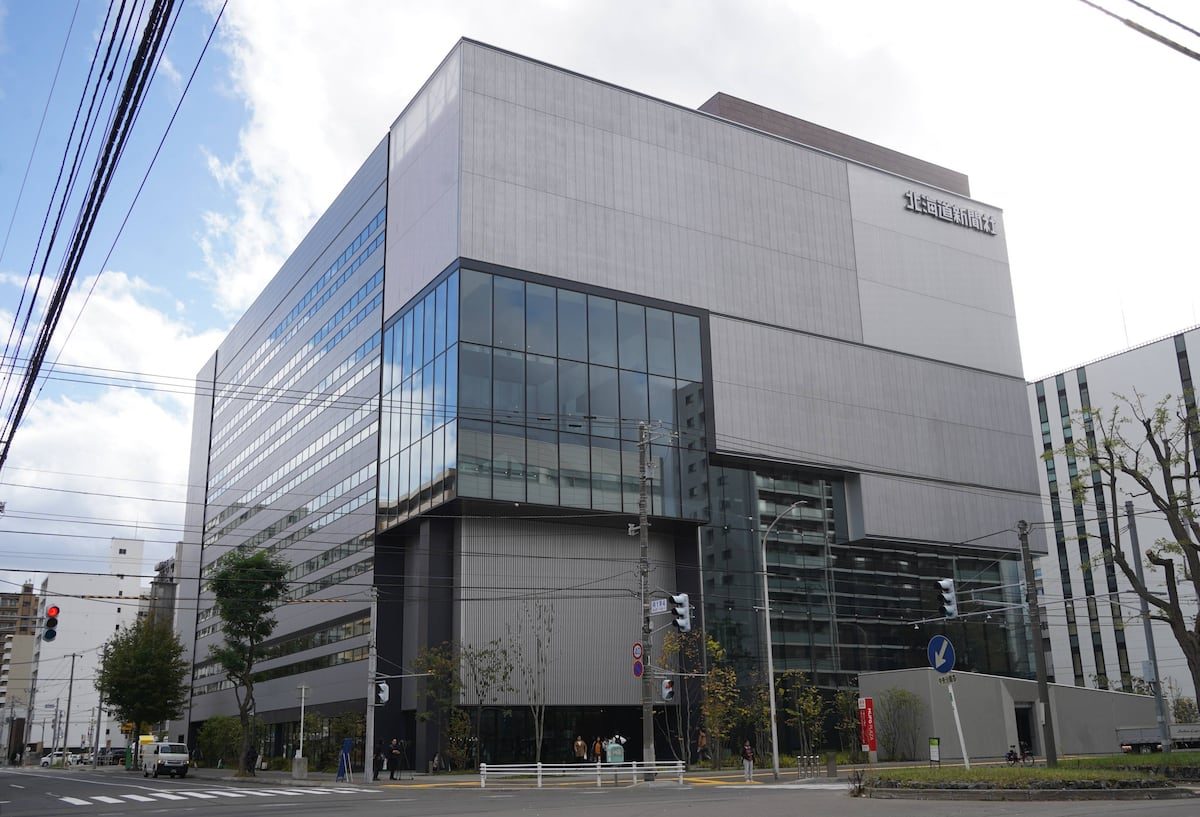
A Hokkaido Shimbun reporter held by Russia on suspicion of spying has Sakhalin roots of his own, and his reporting on the island and the Northern Territories carried the weight of that inheritance.
Yuki Imai, 34, is the Yuzhno-Sakhalinsk bureau chief for the Hokkaido Shimbun. Nov. 13 marks one month since Russian authorities detained him on spying charges, Sankei Shimbun reported.
His grandfather was from Karafuto, the Japanese name for Sakhalin. Imai studied Russian at a university in the Kansai region and also studied in St. Petersburg, in northwestern Russia, according to people familiar with him.
He was known for fluent Russian. His bylined stories returned again and again to the Northern Territories, the four islands off Hokkaido that Japan claims and Russia administers.
He wrote about a man who left Etorofu as a schoolboy and his life since. He wrote about a 100-year-old man who published a collection of haiku about his home island of Kunashiri. He wrote about a Russian novel depicting exchanges between Japan and Russia on the Habomai islets.
Imai interviewed former islanders and their descendants in Nemuro, the Hokkaido city that is the base of the campaign for the islands' return, and in Tokyo.
“He valued meeting people and interviewing them.”Junko Yamada, a third-generation islander whom Imai interviewed repeatedly
Yamada, 44, said Imai interviewed her many times.
After taking up his post in Yuzhno-Sakhalinsk, Imai also wrote about North Korean laborers he saw in the area. In a column on Kholmsk, in southern Sakhalin, where his grandfather lived before the war, he said he had visited the town repeatedly because he wanted to see the traces of Japan left in the streets.
People who saw how he worked in Russia said he pored over published data while reporting energetically across the country.
At the end of last year, in a piece looking back on the previous 12 months, he touched on anti-Japan protests by Russians outside the building housing his bureau and the Japanese consulate. He also introduced Russians who wanted ties with Japan, and closed with this:
“I want to watch our neighbor Russia carefully from Sakhalin. I believe there are things about Japan-Russia relations that can only be seen on the ground here.”Yuki Imai, in a year-end piece for the Hokkaido Shimbun
Pressure from media groups
The Seoul Foreign Correspondents' Club issued a statement expressing deep concern over Russia's detention of the Hokkaido Shimbun reporter and demanding that his legal rights be guaranteed.
The Japan Commercial Broadcasters Association, known as Minporen, called on Russia to release him immediately and lodged a stern protest against what it called an unjust detention.
Russian authorities detained the Hokkaido Shimbun reporter stationed in Sakhalin on spying charges that carry a prison term of up to 20 years.