
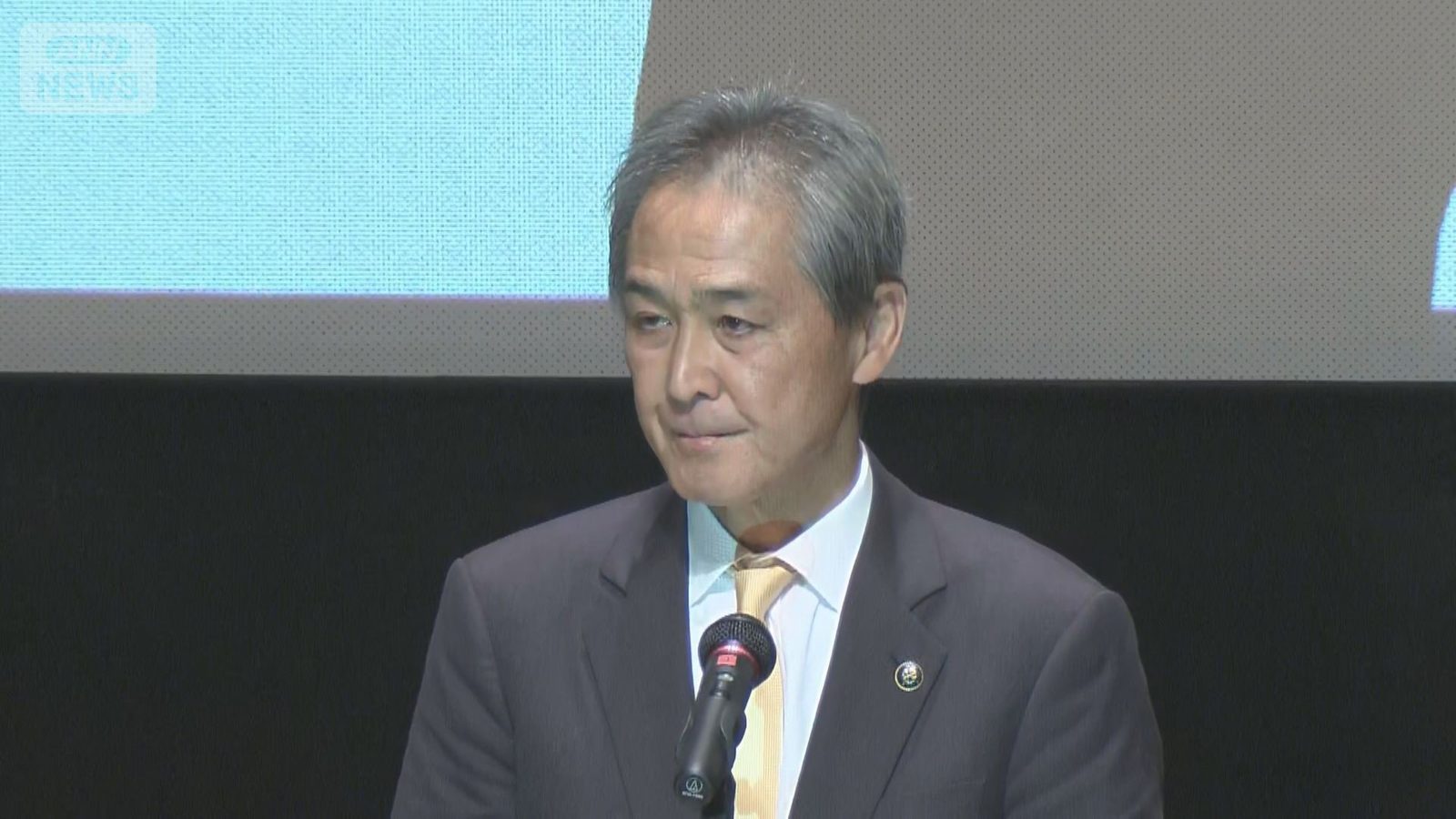
Hitachiota's mayor told more than 600 residents at the city's first briefing on a nuclear waste survey that a final disposal site would give the Ibaraki city a financial base, drawing complaints that the case for it was one-sided.
The literature survey, the first of three stages in choosing a final disposal site for highly radioactive waste, began in the city on the 15th. The briefing was held on the 23rd.
Mayor Sadayuki Suzuki opened by answering criticism that he had decided alone and left residents behind. He said the survey is the start of a dialogue with citizens.
He also said economy minister Ryosei Akazawa had told him the survey does not lead directly to geological disposal. Officials from NUMO, the body handling the disposal project, gave the same assurance.
Governor's consent required
Moving to the next stage, a summary survey, requires the consent of the prefectural governor. Ibaraki Governor Kazuhiko Oigawa has said he will not give it.
Suzuki returned to the microphone to argue for the site itself. He said living standards in the city have worsened sharply over the past 30 years. He said the city needs some foundation to survive.
“If a major national project comes, it will function well enough as a basis for the town's existence.”Sadayuki Suzuki, mayor of Hitachiota
He cited the benefits: about ¥160 billion in fixed asset tax revenue, a key source of the city's own funds, and an economic ripple effect of about ¥1.7 trillion.
On safety, with the waste to be buried underground for up to 100,000 years, Suzuki said he had reached his own conclusion. Burying it more than 300 meters deep would allow it to be managed safely, he said.
Questions screened in closed session
The question-and-answer session was then held behind closed doors. According to residents who took part, organizers read out selected questions submitted in advance.
“I had prepared questions of my own, but that was the format. That way they can pick only the questions that suit them, and you can't tell whether they answered.”a resident who attended
Another resident said the explanations focused on the positive, repeating that everything was safe and fine. There was no explanation of how risks would be handled if something went wrong.
“The explanation of the risky parts was lacking, so I can't feel reassured.”a resident who attended
A third resident said they did not intend to oppose the literature survey, but that it was still unclear whether a site would actually be built.