
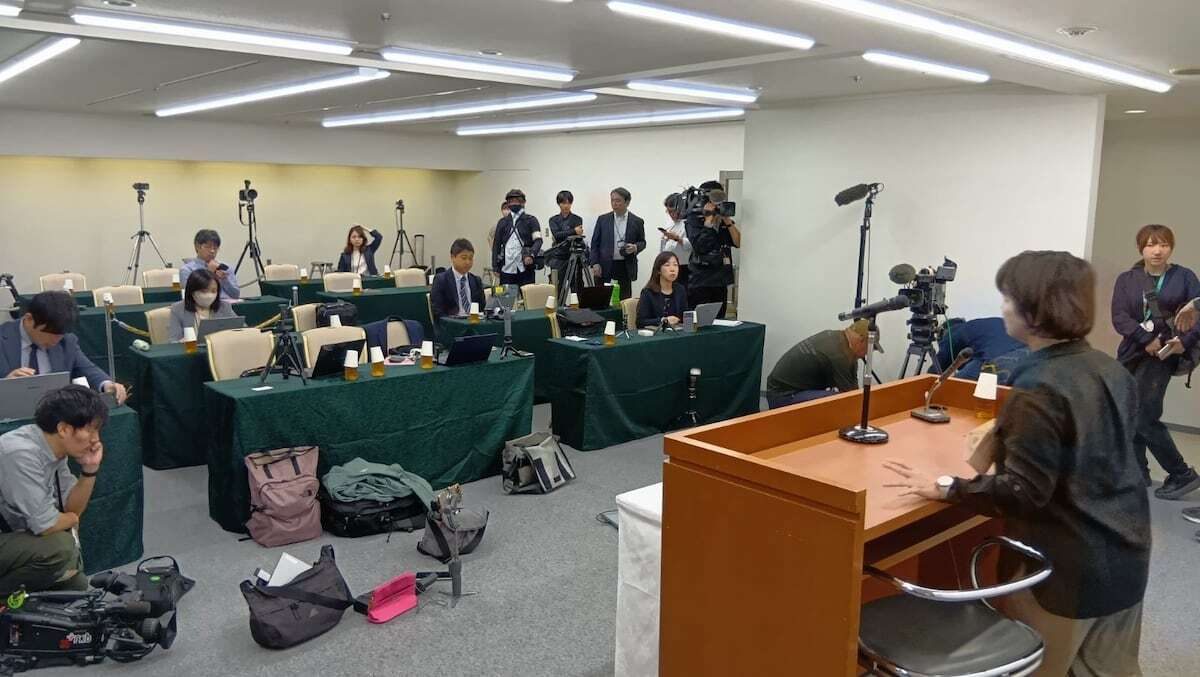
Isao Kurauchi, the former speaker of the Fukuoka Prefectural Assembly, denied any involvement in payments tied to the chamber's speaker and deputy speaker posts at a news conference in Fukuoka City on the 5th, saying "there is no such fact." It was his first public appearance since he resigned his seat in August.
Kurauchi, who has consistently denied involvement, had said he was stepping down because "it is not my intention for the confusion to continue." He was speaking publicly for the first time about the payments since leaving the assembly.
The payments have been described by several sitting and former assembly members. In July, assembly members Motoyoshi Yoshimatsu and Hideyuki Eto said they had paid more than ¥27 million in total to Kurauchi and other senior figures in the Liberal Democratic Party's prefectural assembly caucus before they took the speaker and deputy speaker posts.
In October, assembly member Akira Higuchi, a former speaker, said he had paid about ¥6 million in total to LDP officials. Masahiko Niimura, a former deputy speaker and former assembly member, testified that he handed ¥5 million directly to Kurauchi.
Kurauchi served 10 terms in the assembly and was speaker twice. His influence over prefectural politics earned him the nickname "the don of the prefectural assembly." He denied involvement in the payments before resigning.
Two inquiries under way
The assembly has set up a third-party committee of lawyers and a special investigation committee under the Local Autonomy Act, known as a hyakujo iinkai — a panel with the power to compel testimony — to examine the payments. Both are now investigating.