
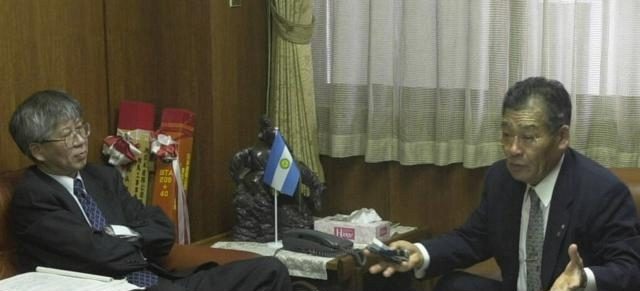
Takashi Kusano, the former mayor of Naraha in Fukushima Prefecture who led the evacuation of the entire town after the Fukushima Daiichi nuclear disaster, died of old age at a hospital in Iwaki on the 2nd. He was 92.
The wake will be held at 6 p.m. on the 7th, and the funeral at noon on the 8th, at Sankbongi Kaikan Naraha, 22-1 Shimokobama Tsukiyama-dera-ato, in the town. His eldest son Masashi, president of Kusano Construction, is the chief mourner.
Two decades as mayor
Kusano ran a company and served as a town assembly member before winning the mayoral election in 1992. He held office for five terms, 20 years, and brought J-Village — a national football training center — to the town.
He also chaired the council formed by the four towns that host the Fukushima Daiichi and Daini nuclear plants.
People who knew him describe a man of few pretenses. "He was open and unguarded, inside and out," Naraha Mayor Yukihide Matsumoto said. Izumi Yoshida, a former senior vice minister for reconstruction, called him "a big-hearted man with a boss's streak."
A nuclear waste dump and a merger
Perhaps for that reason, he also made remarks that stirred controversy.
In 2011, the year of the Fukushima Daiichi accident, reports emerged that eight towns and villages in Futaba County were considering a merger, led by Naraha and others. Kusano argued his own view: "If things go on like this we may fall apart, so a merger is probably necessary too."
He was also known for pushing to host a final disposal site for high-level radioactive waste — spent nuclear fuel that stays hazardous for thousands of years — a proposal that divided towns weighing the subsidies against the stigma.