
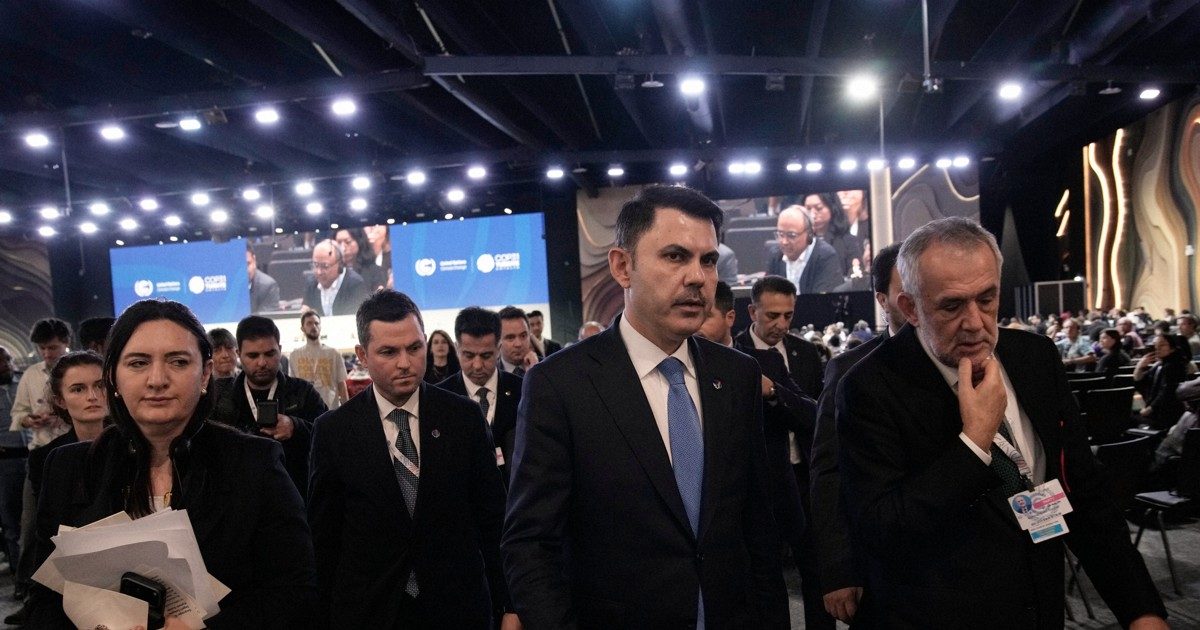
The UN climate summit in Turkey ended without an agreed outcome document on Sunday, after its chair abandoned adoption of the text when the European Union and island nations rejected a draft that dropped language on moving away from fossil fuels.
Murat Kurum, who chaired COP31 — the 31st Conference of the Parties to the UN Framework Convention on Climate Change — announced he was giving up on adoption at a plenary session, the Mainichi Shimbun reported. Talks had been extended by two days in an attempt to bridge the gap, but the negotiations broke down.
Decisions at a COP require consensus among all parties. Previous conferences have failed to reach agreement twice: COP6, held in The Hague in the Netherlands in 2000, and COP15, held in Copenhagen in 2009.
A call for consensus that did not hold
Opening the plenary after presenting the draft on Sunday, Kurum urged countries to back it. "The decisions born in this hall will show the world that multilateralism can still deliver," he said.
The EU, Panama and many other countries opposed the text. Kurum then told the session that agreement had not been reached and the decisions would not be adopted.
“Agreement has not been obtained, and these decisions were not adopted.”Murat Kurum, COP31 chair
Fossil fuel language removed
The draft made no direct reference to "moving away from fossil fuels," wording sought by European countries and island nations. It only recalled the 2023 COP28 decision to agree to accelerate that transition.
During the session, European nations pressed for the phase-out language to be written into the text, and a series of countries published their own road maps toward abolishing fossil fuels. The first draft, issued on the 16th, included a commitment to accelerate the transition. It was removed entirely from the next draft on the 19th, over strong opposition from oil-producing countries.
1.5C goal and the missing figures
The international community has set a goal of holding the rise in temperature since the industrial revolution to 1.5 degrees Celsius. In September, the UN Environment Programme projected that the world would exceed 1.5 degrees within a few years. The draft expressed "deep concern" at that outlook.
As a countermeasure, the text set a target of raising the global electrification rate from the current 23% to 35% by 2035. It did not include "clean electrification" tied to renewable energy, wording Europe and others had sought, and critics said the goal would not lead to cuts in greenhouse gas emissions.
On adaptation funding — money to help developing countries soften the effects of climate change — the specific figure in the first draft, at least $120 billion a year by 2035, was dropped. The deletion drew disappointment.