
China's defense ministry has branded Japan's expanding defense budget and revised security documents as a revival of militarism, folding the country's wartime history into its case against Tokyo's current buildup.
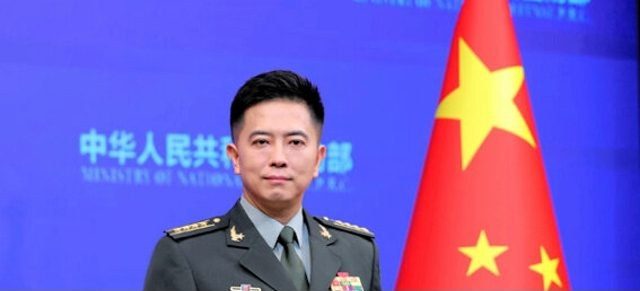
"The 'gray rhino' of 'new militarism' has lost control and is charging forward, threatening regional peace and stability," ministry spokesperson Chen Xi said at a regular briefing on October 10, criticizing Japan's revision of its three national security documents and its consideration of nuclear-powered submarines.
China began invoking "new militarism" after Prime Minister Sanae Takaichi's Diet answer on a Taiwan contingency last November drew a sharp backlash in Beijing. China responded by restricting trade and people-to-people exchanges, tightening pressure on Japan, and the phrase became part of that campaign.
A label built on history
From Beijing's view, Japan's higher defense spending and its review of the security documents read as a threat. China pairs those moves with the prewar period, when Japan put the military at the top of national priorities and pushed into foreign aggression, and argues Tokyo is trying to revive that path.
Foreign Minister Wang Yi, who also sits on the Politburo, has said Japan is trying "to revive militarism." The source does not say when China first began using the term.
The Asahi Shimbun is publishing a five-part series on China's narratives toward Japan. Later installments are set to cover internal criticism that the logic has gaps, and Beijing's repeated argument that Okinawa's sovereignty is undetermined, which it frames around the name Ryukyu rather than Okinawa.