
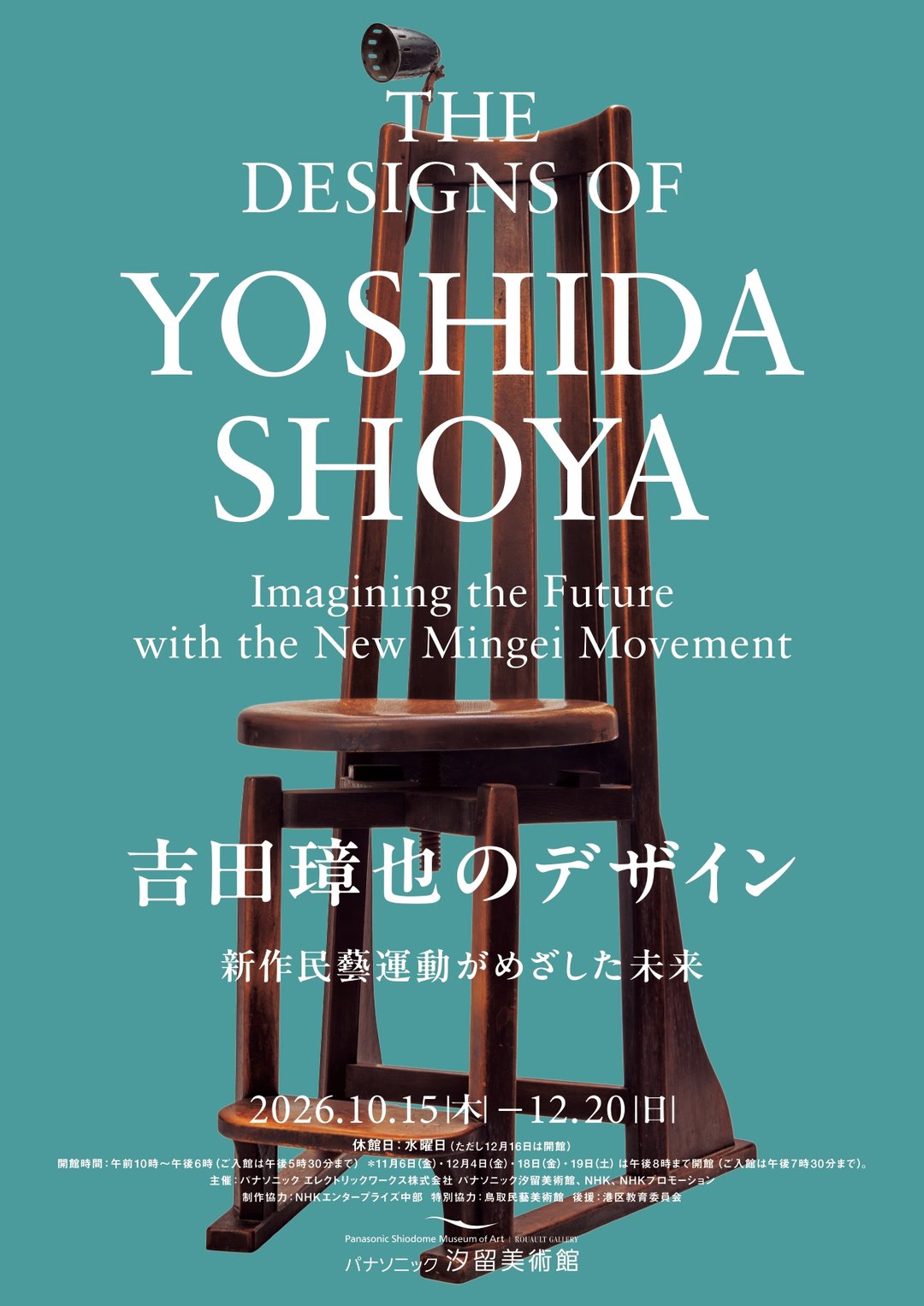
Around a century ago Soetsu Yanagi and others set out the idea of mingei, folk craft, and the movement that grew from it spread across Japan. This exhibition turns to Shoya Yoshida (1898–1972), a Tottori physician who lived in the same era, carried that thinking forward and built a pioneering movement around everyday life and design. Yoshida practised as an ear, nose and throat doctor while working as what might be called a producer of mingei.
He designed new craft objects and also built the systems that produced, distributed and sold them. After opening his clinic in Tottori in 1931 he worked to revive local Ushinoto ware and collaborated with craftspeople in ceramics, woodwork, metalwork, dyeing and weaving, and washi paper, developing and promoting what he called new mingei. His new mingei movement took shape in the Takumi Kogei shop as a sales base and in the Tottori Mingei Museum, which showed his collection.
It reached further, into the protection of the natural environment and cultural properties of the region, including the Tottori Sand Dunes and the Jinpu-kaku villa. The exhibition follows that trajectory through roughly 300 objects, including pieces for which Yoshida devised the designs, together with related documents. Part of the former Yoshida clinic and part of his former residence are also recreated, so the practice of mingei can be seen within the architecture where it lived.