
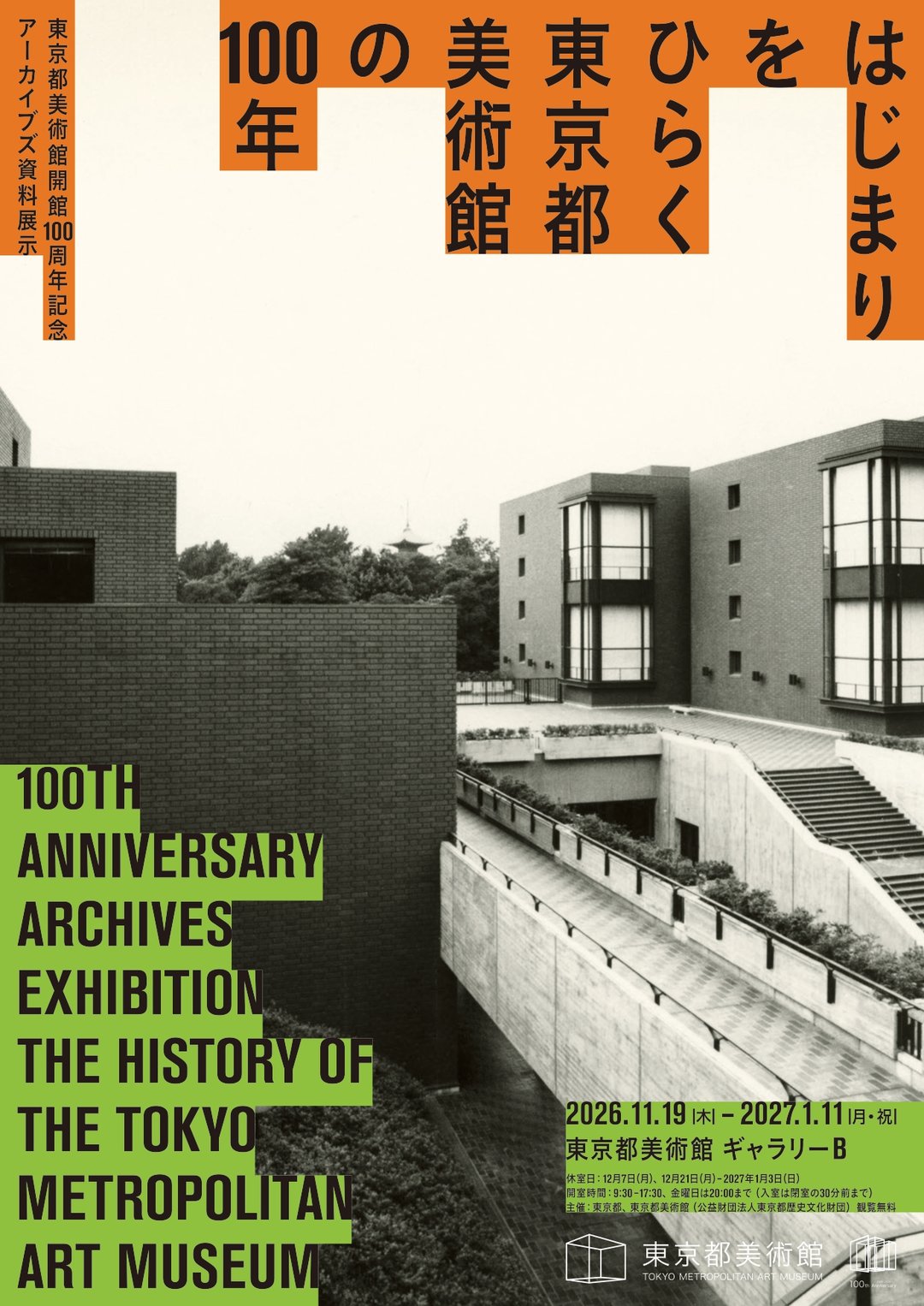
The Tokyo Metropolitan Art Museum opened in 1926 in Ueno under the name Tokyo Prefectural Art Museum. Its founding was made possible by a donation of one million yen toward construction by Keitaro Sato, a coal merchant from northern Kyushu. After opening, the museum served mainly as a venue for artists' groups to present their work.
It also hosted exhibitions of avant-garde art that became legendary, and was a principal venue for many shows of Western masterpieces. It took an early lead in activities that help people enjoy and understand art more deeply, such as art courses and a library, and offered various opportunities for public participation. Described as a plaza where makers and viewers of art pass each other, the museum moved from its old building to a new one over the course of a century and continues to work toward being a place of creation and coexistence.
This exhibition marking the museum's 100th anniversary focuses on the activities that were born and unfolded at the museum and the people around them, looking back on its history. Through valuable materials drawn mainly from the museum's own archives, it offers a chance to reconsider the history and role of Japan's first public art museum.