
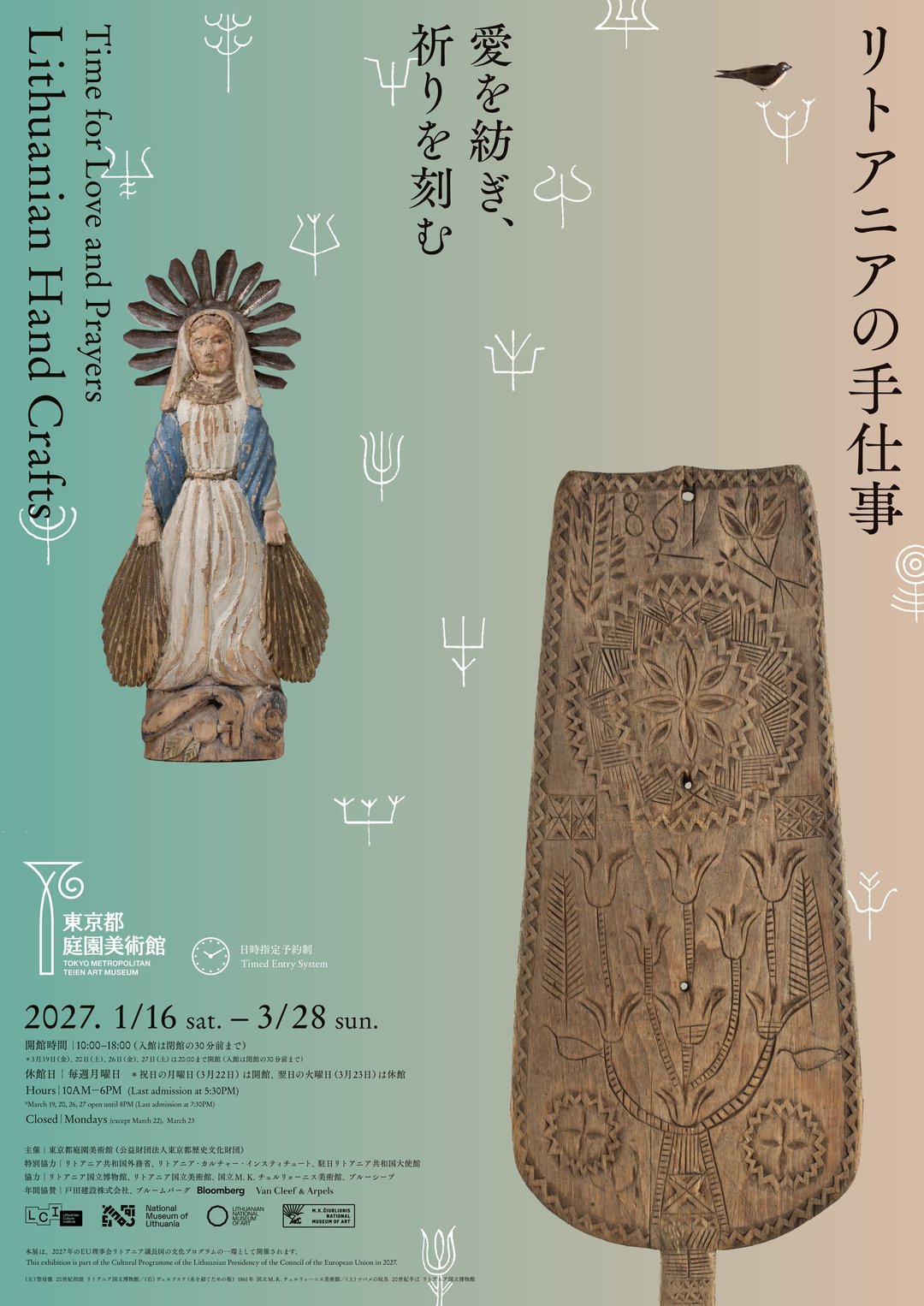
The exhibition is the first in Japan to give a full account of Lithuanian handwork, organised with the cooperation of the National Museum of Lithuania, the Lithuanian National Museum of Art and the M. K. Čiurlionis National Museum of Art.
On show are objects born of daily life: the verpstė, a board used for spinning thread; woven textiles such as aprons and linen; woodwork including chairs and towel rails; pottery; and rattan baskets. Alongside them are pieces rooted in faith, among them crosses, holy images and prints. Lithuania was one of the last countries in Europe to adopt Christianity, so the decoration of its handmade objects and its Christian crosses and icons still carry the worldview of the ancient Balts, who saw the cycle of life in the sun, trees and animals.
Lithuania was repeatedly ruled by other powers, at times even losing its own language, and people held fast to their days and repeated their prayers for peace. The venue, the former Asaka Palace, is a leading example of Japanese Art Deco architecture, built after the 1925 International Exposition of Modern Decorative and Industrial Arts. Placing anonymous, everyday handwork within a building that represents the height of modern industry and decorative art brings different eras, cultures and values into one space.