
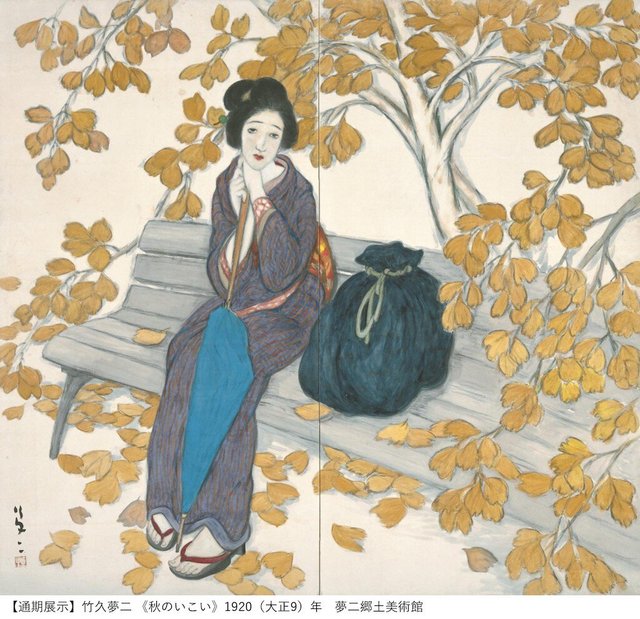
The exhibition gathers Yumeji collections from across Japan in one large retrospective. Alongside the celebrated painting Kurofune-ya, it presents Japanese-style paintings, oil paintings, sketches, design work and scrapbooks. Yumeji worked as a painter, poet, journalist, designer and illustrator from the end of the Meiji period into the early Showa years.
His images of women, known as "Yumeji style", and his retro-modern designs made him a symbol of Taisho romanticism. His work moved between nostalgia for the countryside and urban sophistication, drawing on traces of Edo and a longing for foreign lands while depicting the manners of his own time. It spread widely to the public through magazines, picture postcards and exhibitions.
The show also covers his designs for everyday goods, his books and magazines for children, his lyrics for the popular song Yoimachigusa, and the sketches and words with which he recorded the Great Kanto Earthquake. Kurofune-ya is shown in an exhibition for the first time in about 40 years. Together with his wide-ranging output, it traces the creativity with which he crossed genres and moved his era.