
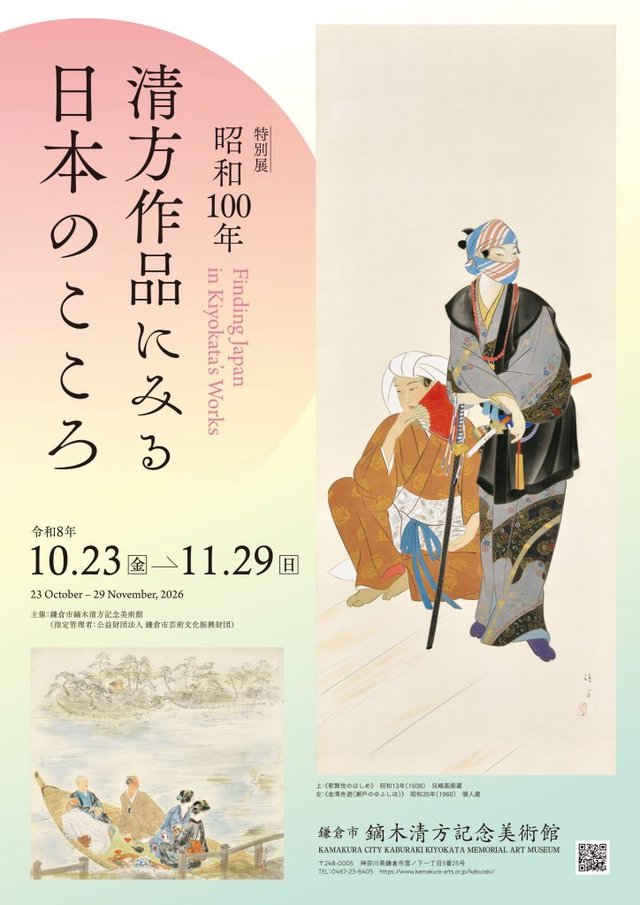
The exhibition marks 100 years since the start of the Showa era in 1926 by focusing on the Showa-period work of Kaburaki Kiyokata (1878–1972). In the early Showa years, as natural disasters and economic crisis gave way to war, Kiyokata was at the height of his career. He observed the people living through his own time.
After the Great Kanto Earthquake, as the city and society were rebuilt and transformed before his eyes, he returned to the people and culture of Edo and Meiji that had stayed vivid in his mind, and began to paint them. He also proposed and practised what he called "tabletop art" — small works and printed pieces — so that the pleasure of looking at art would take root in everyday life. During the war, when painters were pressed into wartime cooperation, he resolved firmly not to paint pictures of battle, and stayed in his studio working on clear, serene figure paintings and portraits of beautiful women.
Having lost his Tokyo home in the air raids, he moved to Kamakura after the war and continued to work there until his death. The exhibition looks at the beauty of the art that emerged from his struggle with his times, and also presents his thoughts on making art as set down in his essays.