
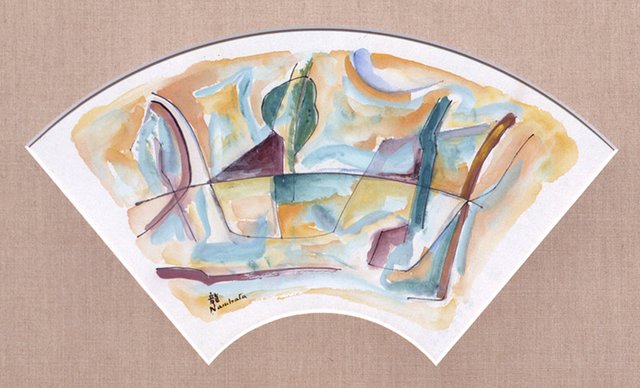
The exhibition draws on the museum's collection of postwar Japanese art donated by the collector Kotaro Terada, and brings together nihonga painting, prints and abstract painting on the theme of autumn, along with works that evoke the season. Japanese art has long been closely engaged with aspects of nature, above all the four seasons and their turning. The show sets out to question the familiar idea that this sensibility arose simply from living close to the climate and landscape.
Recent scholarship, the exhibition notes, has argued that traditional seasonal imagery was shaped less by direct observation of weather and nature than by a highly refined and systematised aesthetic rooted in waka and other poetry, and that it took hold and developed through the "secondary nature" built into daily life, such as garden design, ikebana, bonsai and the tea ceremony. In that process several different views of nature crossed and mingled with the political, economic and cultural conditions of their time. Sensitivity to the passing of the seasons and to their fragility has also been bound up with the Buddhist teaching that all things are impermanent.
Autumn, the season most readily tied to that sense of transience, has held a particularly large place in the expression of the four seasons. Against this background of inherited seasonal sensibility and established forms, the works on view follow artists as they sometimes take those conventions over, sometimes shift or rearrange them, and sometimes depart from them, in search of their own feeling for and expression of the seasons and of nature.