
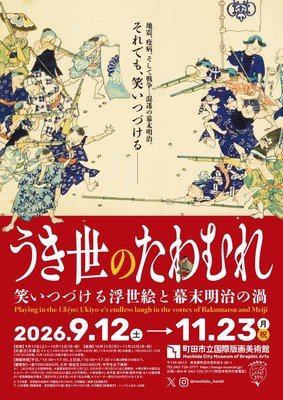
The exhibition draws mainly on the museum's own collection of ukiyo-e, focusing on comic and satirical prints from the late Edo and Meiji periods. Around 250 works are shown across the two halves of the run. Among them are Hokusai-era classics of the genre: Utagawa Hiroshige's Fifty-three Stations of the Tokaido (Hoeido edition) and Utagawa Kuniyoshi's print that assembles several figures into the profile of a single man's face.
The selection also includes namazu-e (catfish pictures) and hashika-e (measles pictures) made after earthquakes and epidemics, satire from the end of the Edo period, Shosai Ikkei's pictures of the new Meiji civilisation, and Kobayashi Kiyochika's ponchi-e social caricatures. The period covered was one of upheaval, with natural disasters, epidemics and the Boshin War unsettling daily life. The prints show how ukiyo-e kept treating the world as a place of play rather than sorrow, and how its characters never stopped laughing.
Visitors can follow that thread and catch a sense of the mood of the times through the works on display.