
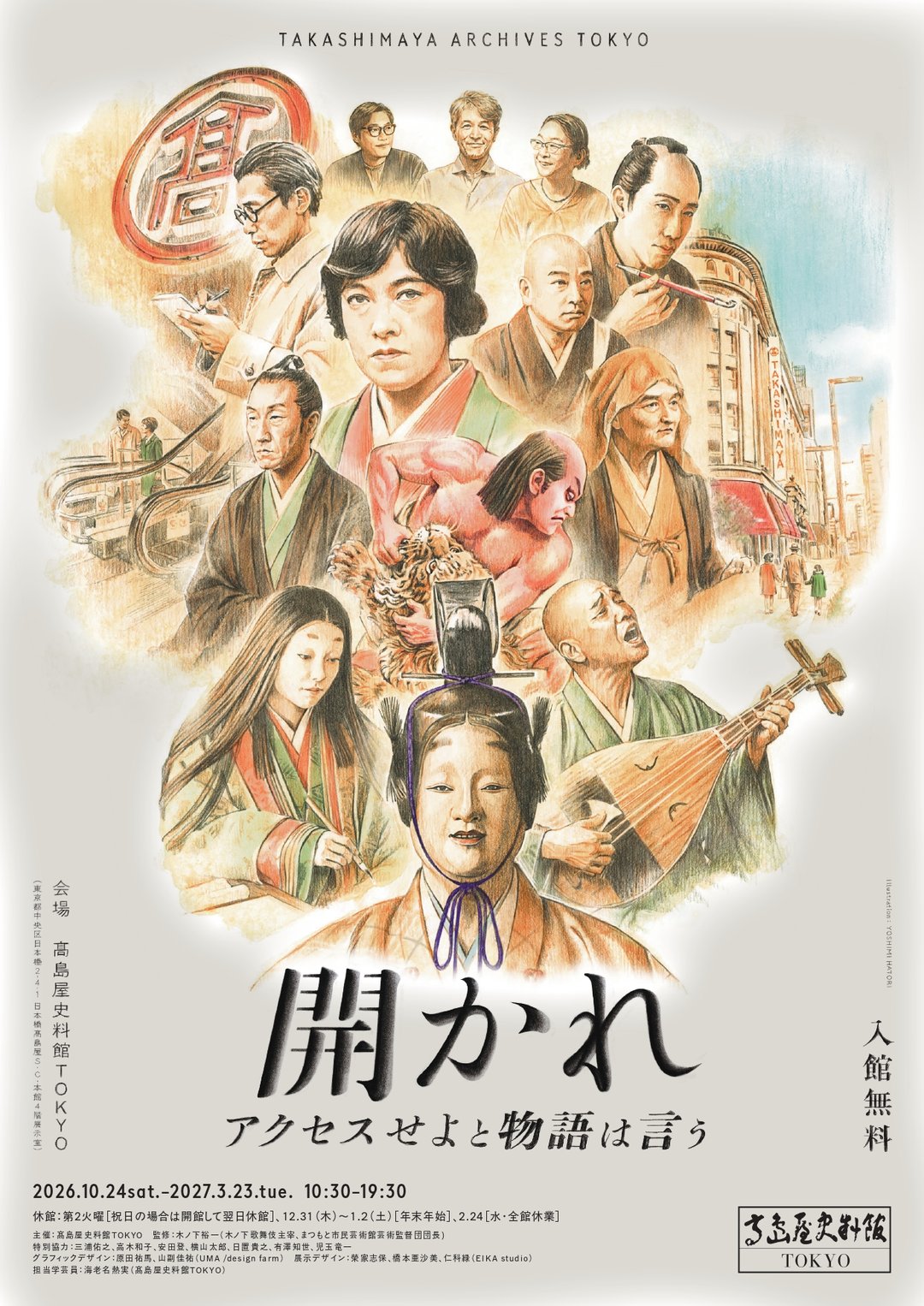
The exhibition asks why classics do not grow old. Stories written centuries or more than a millennium ago are still read, performed and passed on in changed forms, and the show questions whether it is enough to say they survived simply because they are excellent works. Most of what is called classic today was not open to many people at the outset.
Boundaries of status, gender, generation, region, body and economic circumstance separated those who could enjoy literature and art from those shut out of it. The exhibition traces how literature and art have been opened across those boundaries, and how that process involved trial and error, devices for reaching people, and invention aimed at new forms of expression. The story runs in four chapters: the ancient Kojiki, then The Tale of Genji, then The Tale of the Heike together with Noh, and finally early modern kabuki and kibyoshi illustrated books.
What emerges is a history in which the ways culture and art are opened have been rearranged again and again over time. The exhibition also asks what being open means at all. Crossing a boundary is not the same as the boundary disappearing, and opening something to some people can create other boundaries.