
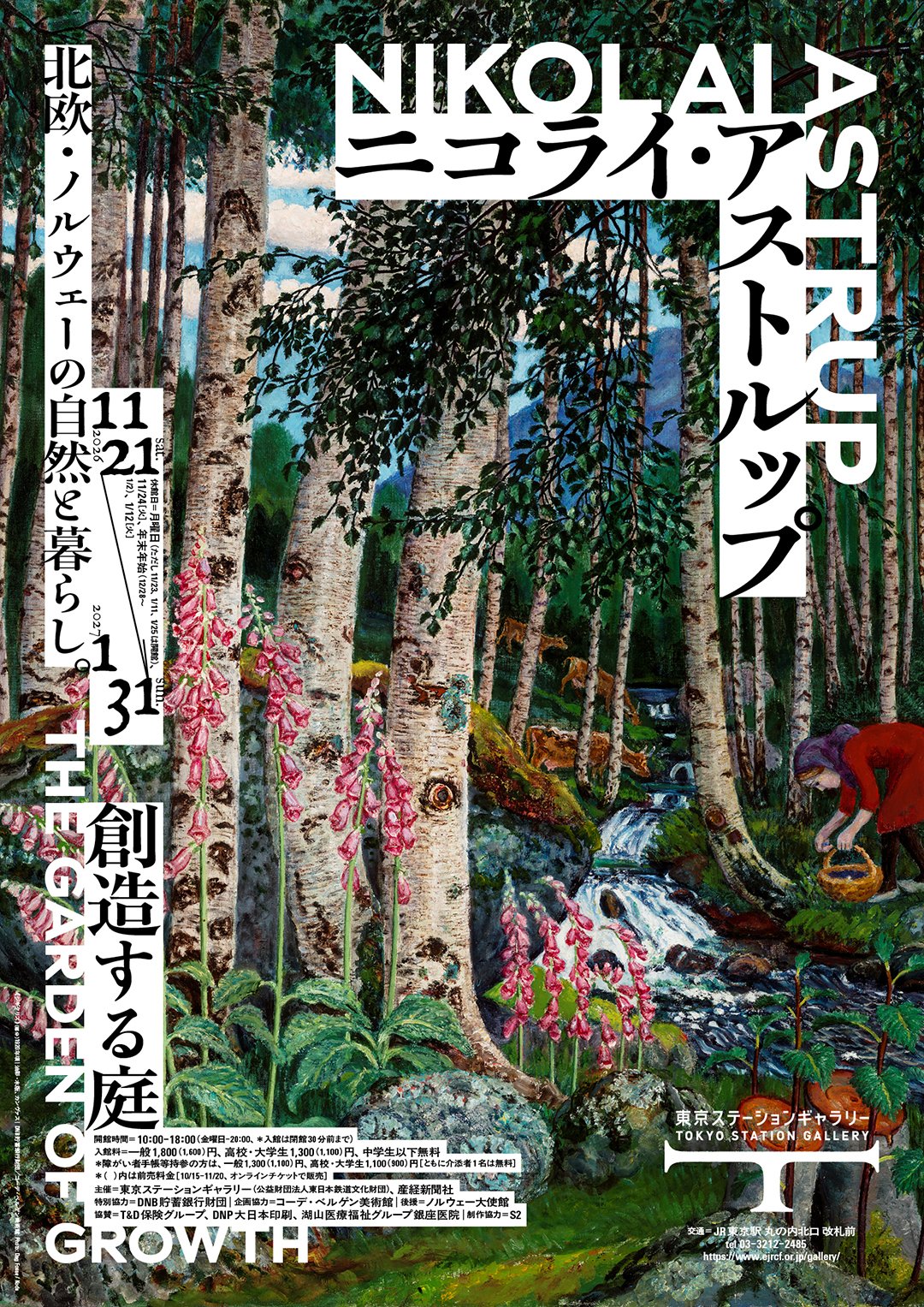
Nikolai Astrup (1880-1928) is counted among the most outstanding painters of early twentieth-century Norway, and his reputation has grown worldwide in recent years. This is the first retrospective of his work in Japan. Astrup grew up in Jølster, a lakeside village in western Norway ringed by steep mountains, and he based himself there for his whole life.
He painted the nature and the daily life of the place as they changed with the weather and the seasons: the fantastical midsummer bonfires burning against the white-night sky, interiors enlivened by craft objects, and the fruit trees and rhubarb he grew himself. The garden above all, a place that produced food and also drew his artistic attention as a site of creation, became the motif that embodies his art. His paintings draw their power from a distinctive symbolism carried by an exceptional sense of colour.
He always depicted the real world, yet through vivid colour and bold distortion he raised ordinary scenes into symbolic images that call up the viewer's memories and senses. Astrup was also a highly original printmaker. Influenced by Japanese ukiyo-e prints, he worked in an unparalleled method that combined oil painting and woodblock, and his prints are so varied that each can be called unique.