
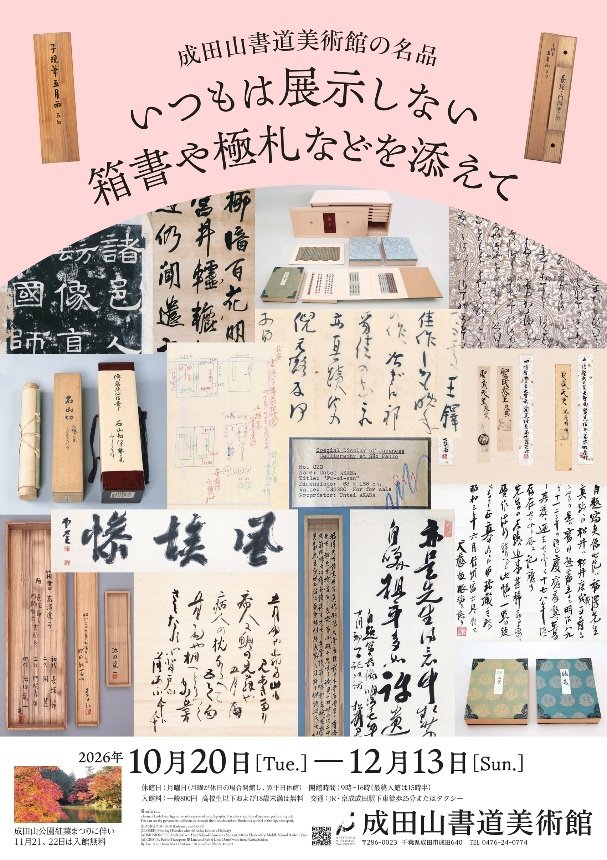
Calligraphy rarely comes down to us as a single sheet of ink on paper. Works are usually kept in wooden boxes or cardboard boxes to protect them, and those containers often carry inscriptions, notes or pasted labels. Inside the boxes there may be authentication slips, letters, appraisal certificates, transcriptions or explanatory notes stored with the work, and framed pieces may have exhibition labels on the back.
Such accompanying material holds a great deal of information about a work: how it was made, why it is valued, how it was handed down, where it has been exhibited and what its owners thought of it. Yet these items are normally seen only by the people who own or handle the works, and they are almost never put on display. This exhibition focuses on those usually hidden accompaniments, drawing on calligraphy from a wide span of periods, from sutra copies of the Nara period to the present day.
Visitors are invited to look at the works while thinking about their backgrounds, using the accompanying material as a clue. On the first floor, the collection highlights exhibition presents modern calligraphy.