
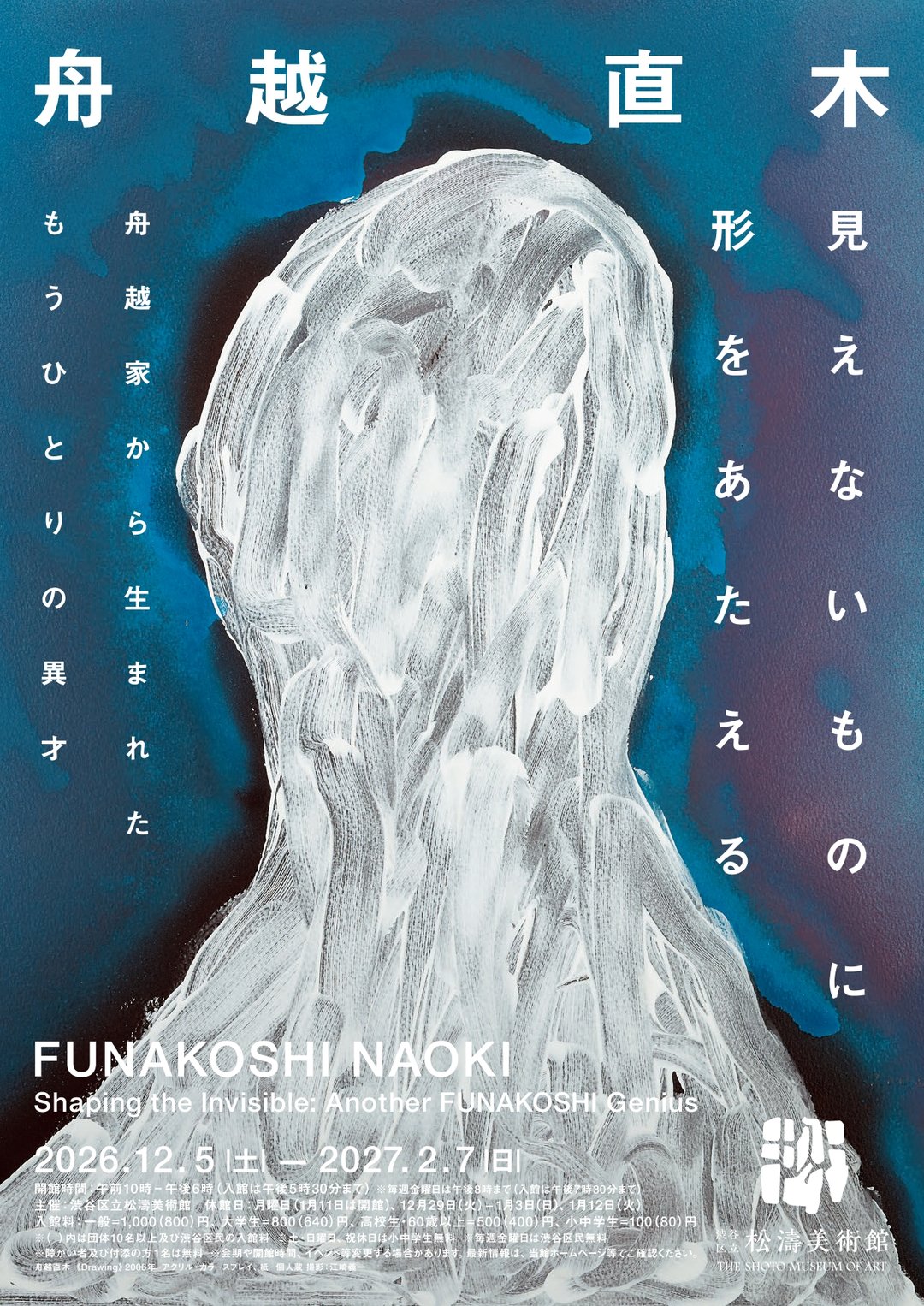
Naoki Funakoshi (1953–2017) was born in Tokyo, into a family of figurative sculptors: his father Yasutake Funakoshi (1912–2002) and his elder brother Katsura (1951–2024). He followed them into art, graduating from Tokyo Zokei University's painting department and showing two-dimensional work early on. From the late 1980s he turned increasingly to abstract sculpture, moving freely between sculpture and painting and working without fixed form.
His pieces try to give shape to the vague things inside him and to the voices he heard, shifting from amorphous forms that recall the legs or tentacles of buildings and creatures into droplets, hearts and spheres. In a field that aspires to monumentality and permanence, his insistence on making room for elusive things — past time, atmosphere, feeling — may itself have carried a streak of rebellion. His trajectory shows him concentrating on one theme at a time, transforming it, then moving on.
In the 2000s he produced distinctive drawings and three-dimensional works that seem to pursue human existence, and that can stir something close to awe. He died of illness in 2017 at the age of 64. Funakoshi remained independent throughout his career, an isolated figure who nonetheless won a fervent following.