
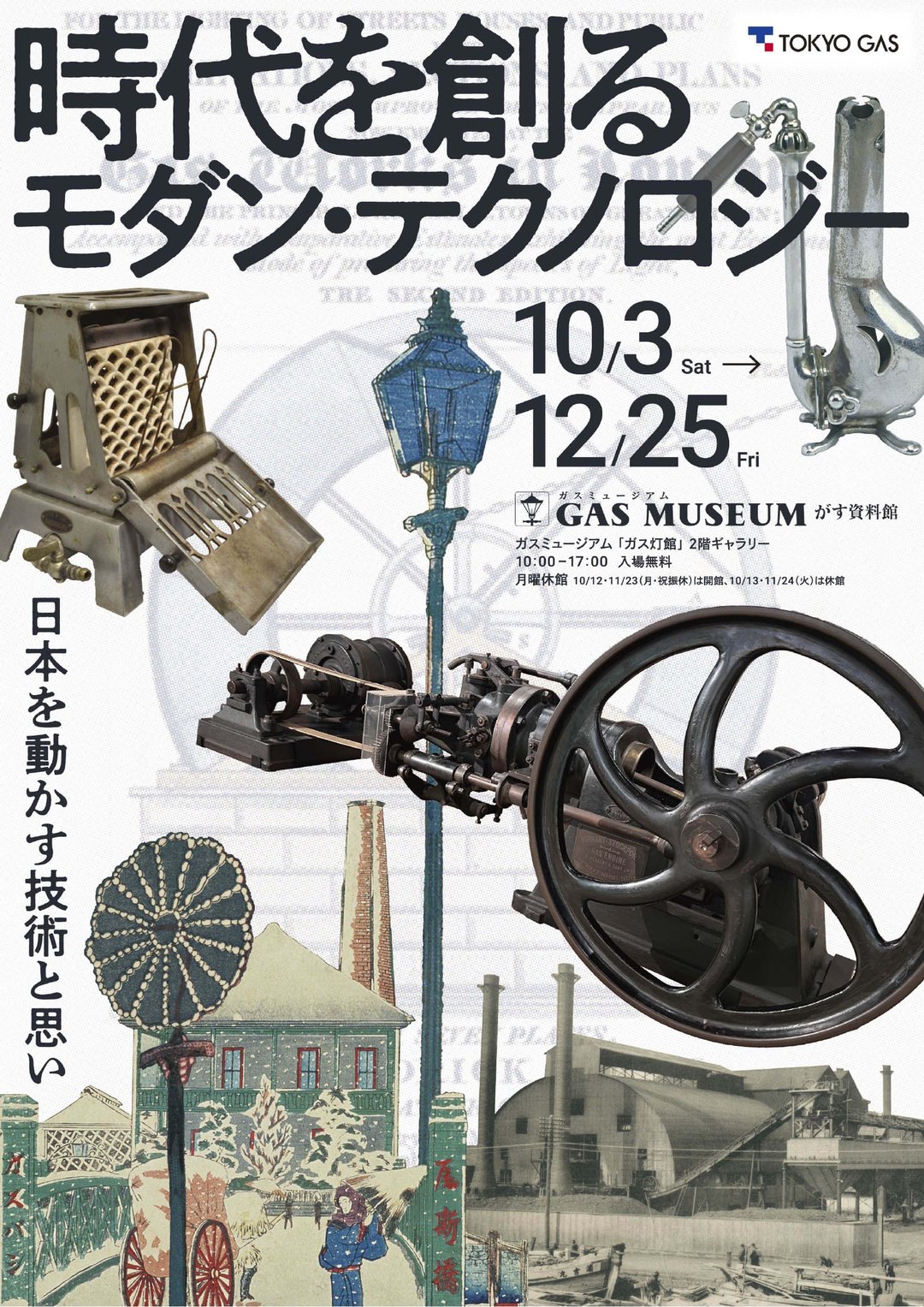
The exhibition looks at the Meiji period, when technology brought in from the West took root in Japan and changed daily life. It centres on the city gas business, one of the forces behind that change, and on the people who pushed it forward. On display are nishiki-e woodblock prints depicting the new technology of the day: the Tomioka silk mill, telegraph offices, the railways and the mint.
Together they show how the country took in the spirit of the era and how people greeted it with surprise and expectation. The story begins with the gas lamps built on Bashamichi-dori in Yokohama in 1872 and follows the city gas business up to the present through period photographs. Gas moved from lighting to cooking, hot water and heating, and the exhibition covers where that development stands now and where it is heading.
A section made with the cooperation of the Nisshin Seifun Group's Flour Milling Museum covers the history of Nisshin Flour Milling, founded in 1900 as Tatebayashi Flour Milling and a major force in the growth of Japan's milling industry and its food culture. With the cooperation of the Musashino Handmade Udon Preservation and Promotion Association, the Kodaira Tourism and Town Development Association and the Kodaira Furusato Village, the exhibition also looks at the wheat and food culture of Kodaira through the udon culture of the Musashino area, which has been designated a 100-year food by the Agency for Cultural Affairs.