
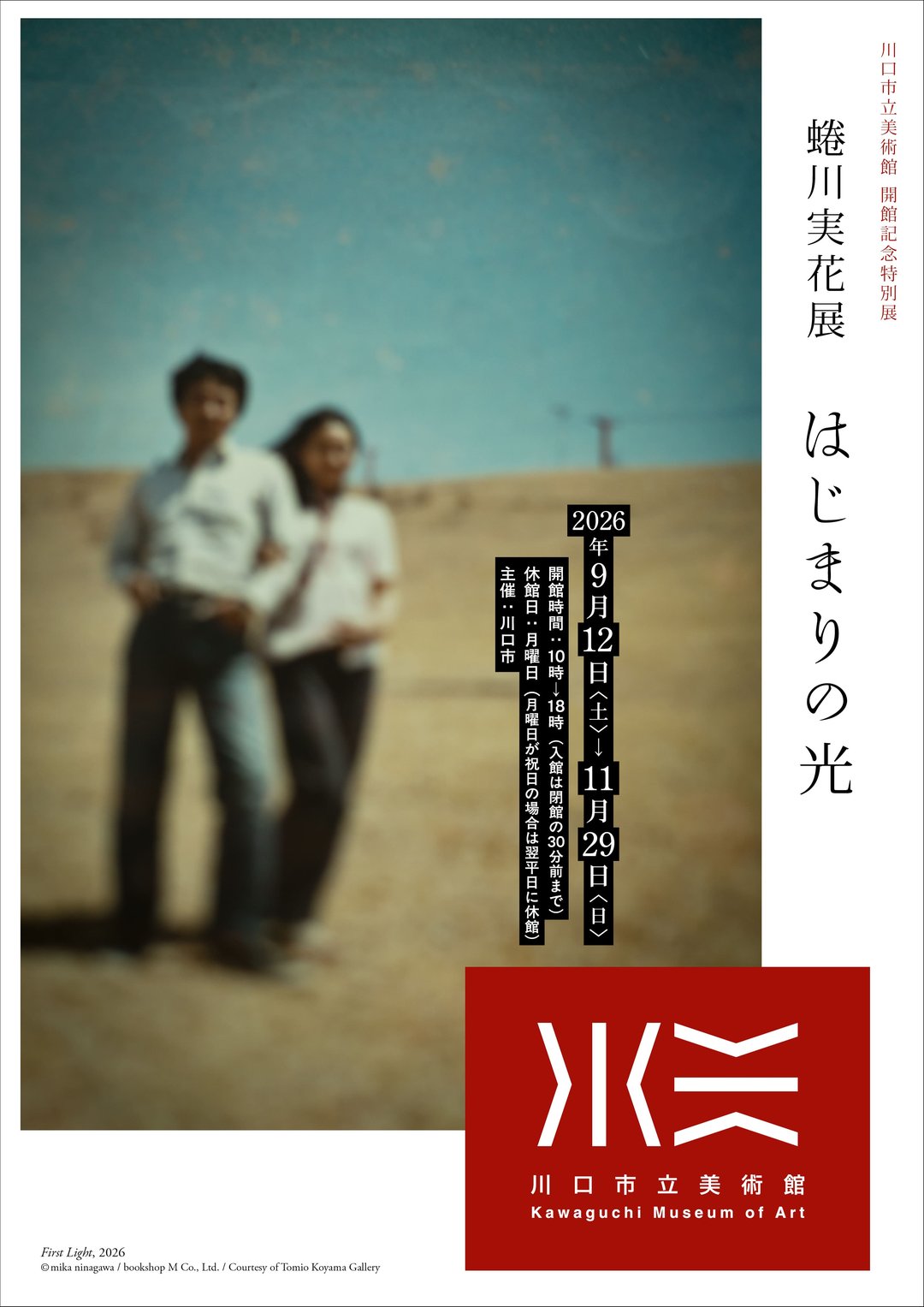
The exhibition marks the opening of the Kawaguchi City Museum of Art and is built around the elements that formed Mika Ninagawa's sensibility in Kawaguchi, the Saitama city where she grew up. She recalls the grotesques of a sideshow tent, the splash of carp blood, the glow of candy, pink-film billboards and swaying electric lights, and the crowds of the Okame fair, where the line between reality and fiction shifted unstably. That wavering is presented as the origin of her pull on the viewer.
The show is divided into two chapters. Chapter One, on the second floor by the entrance, is made of photographs, including newly shown work. It centres on the black-and-white self-portraits she has recorded intermittently for about 30 years since her debut, and on "Utsukushii Hibi", her record of the year and a half in which her father, Yukio Ninagawa, fell ill and moved toward death.
She describes those images as taken with the eyes of someone departing, and they hold the beauty of this world reconfirmed by facing death, and the scenery and feeling that exist only within a flicker of time. Chapter Two, one level down on floor M2, turns to the memories of family that she says most shaped her expression. The space is unusually personal and inward, and is being revealed because the venue is in Kawaguchi.