
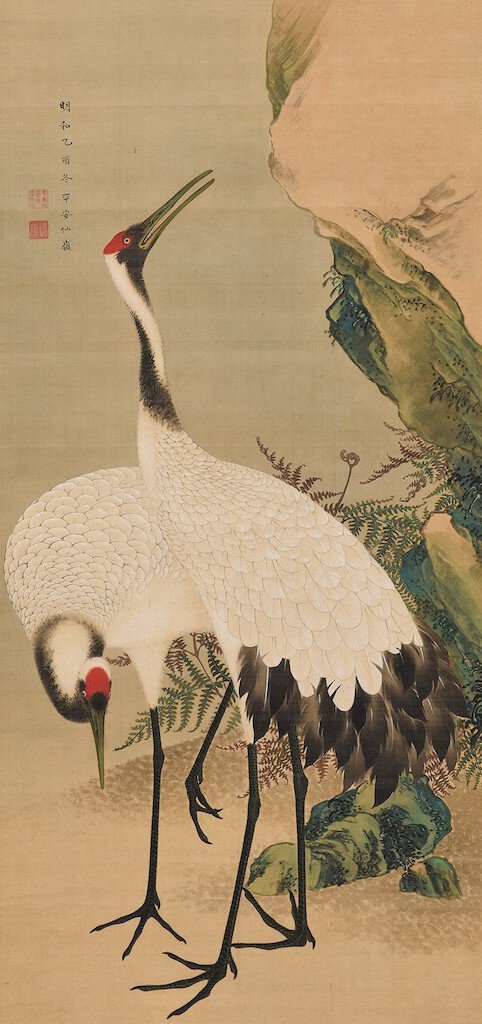
Maruyama Ōkyo (1733–1795) built his reputation on shasei, the close observation of real subjects and the faithful recording of what he saw. The approach won him wide support and gave rise to the Maruyama school, a current that reshaped Japanese painting. Ōkyo did not stop at single pictures.
He also designed whole interiors as a single world, and the finest example is the set of 165 sliding-door and wall paintings preserved at Daijō-ji in Kami, Hyogo Prefecture, known as Ōkyo-ji. Subjects and compositions were planned room by room, so that fusuma and walls flow into one another and create a space of their own. These works are regarded as the summit of his art.
The exhibition centres on the Daijō-ji paintings and sets them alongside works from across his career, from his early years to his last. It traces both sides of his achievement: the realism grounded in observation, and the decorative richness and expansive composition with which he filled a room.