
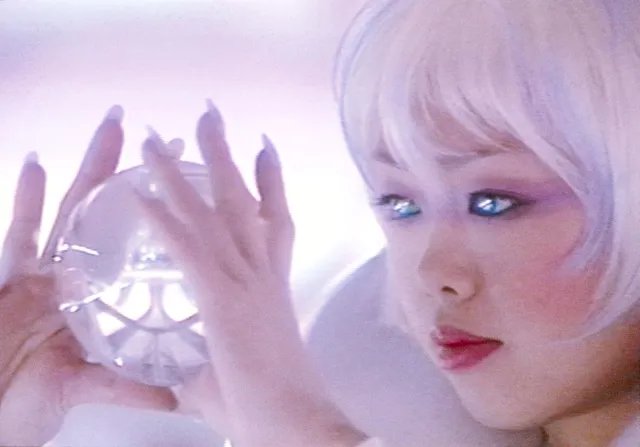
The exhibition brings together around 80 works from more than 30 years of Mariko Mori's practice, including interactive installations, sculpture, video, photography, drawing and performance. Key works from her early period to the latest pieces are shown in a loose chronological sequence, and archival materials and documentation are displayed for the first time. Mori first drew international attention in the 1990s with works enacting post-human and cyborg identities.
Her interests later widened from a futurist aesthetic blending Japanese anime culture toward Japanese nature worship, Buddhism and other ancient thought and spiritual worlds, and further to ancient cultures such as Jomon and Celtic. She has also engaged quantum theory, astrophysics and neurophysics, collaborating with leading scientists and engineers, and since 2000 has made large-scale installations that invite immersive spatial experience. A thread running through the work is a transcendence of time that crosses past and future, leading to "Oneness" — the interconnectedness of all things — a concept rooted in the Buddhist cosmological view that Mori continues to explore.
In 2010 she established the Faou Foundation, which aims to place public art considering the link between the natural environment and humanity permanently on all six continents; works have already been realised in Brazil and on Miyako Island. This is her first solo museum exhibition in Japan in 24 years, since "Mariko Mori: Pure Land" at the Museum of Contemporary Art Tokyo in 2002.