
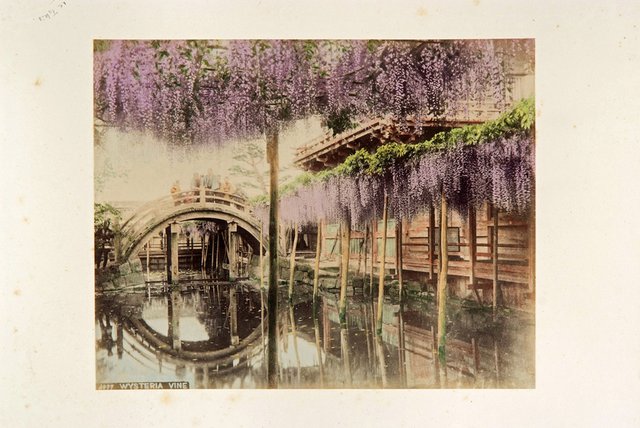
The photographs on show belong to a genre known as Yokohama shashin, images made across Japan from the end of the Edo period into the early Meiji era. The British photographer Felice Beato arrived in the late Edo period, photographed landscapes and people around the country, and opened a commercial studio in Yokohama in 1864. The albums he sold there, with captions written for foreign buyers, were the beginning of the Yokohama shashin album.
Such albums were popular as souvenirs with visitors to Japan, and Japanese photographers soon competed to shoot scenery and customs across the country and sell them in the same form. The albums were luxury objects: a lacquered wooden cover decorated with maki-e and mother-of-pearl inlay held 50 to 100 monochrome albumen prints of roughly four-cut size, coloured by hand. Their lavish construction has led them to be described as a hybrid art craft in which Western photographic culture meets Japanese traditional craft, and their documentary and cultural value is being reassessed today.
The exhibition presents around 80 works selected from the museum's own collection of Yokohama shashin album photographs, offering a view of Japanese landscapes, buildings, daily life and people from about 150 years ago.