
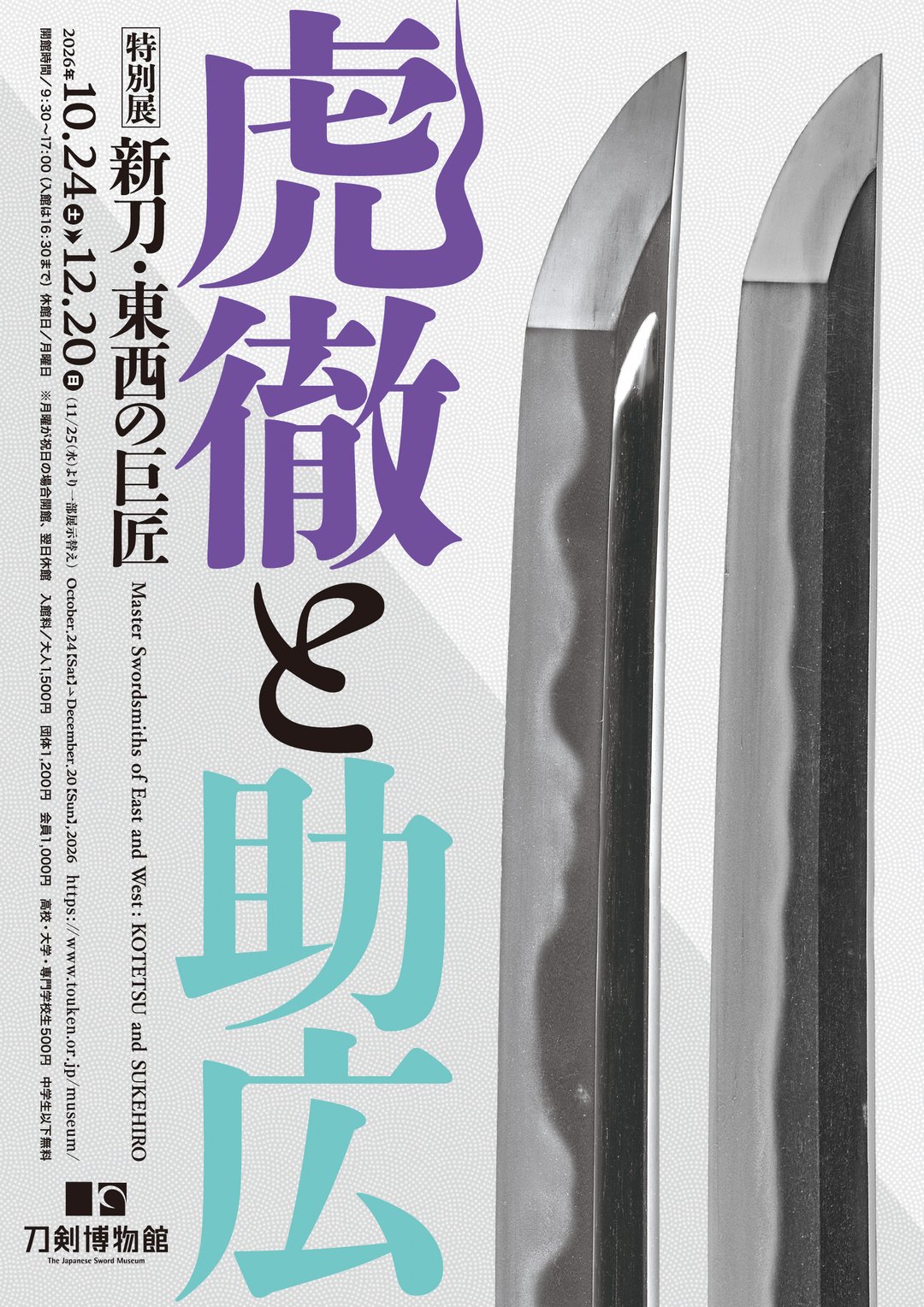
The exhibition compares Nagasone Kotetsu and Tsuda Echizen-no-kami Sukehiro, the two master smiths who represent the Edo period. As cities grew, Edo and Osaka became the two great centres of sword making, and each smith worked in one of them. Kotetsu worked in Edo.
His blades are known for a bright, healthy jigane and jihada, symbolised by his juzuba hamon, and they combine the practicality and beauty that reflect warrior culture. Sukehiro traced his lineage back to the Horikawa Kunihiro school and worked from Osaka. He created the striking hamon called toran, and established a style distinguished by the beauty of the jigane and the clarity of the nioiguchi, a brilliant manner that answered the culture of the townspeople.
Both smiths captivated the samurai of their day and many others, won high praise, and remain popular now. By tracing how each man's style took shape and setting their representative works against each other, the exhibition gives a three-dimensional view of the differences and the shared ground between sword culture in east and west, and opens a window onto one part of early modern sword history.