
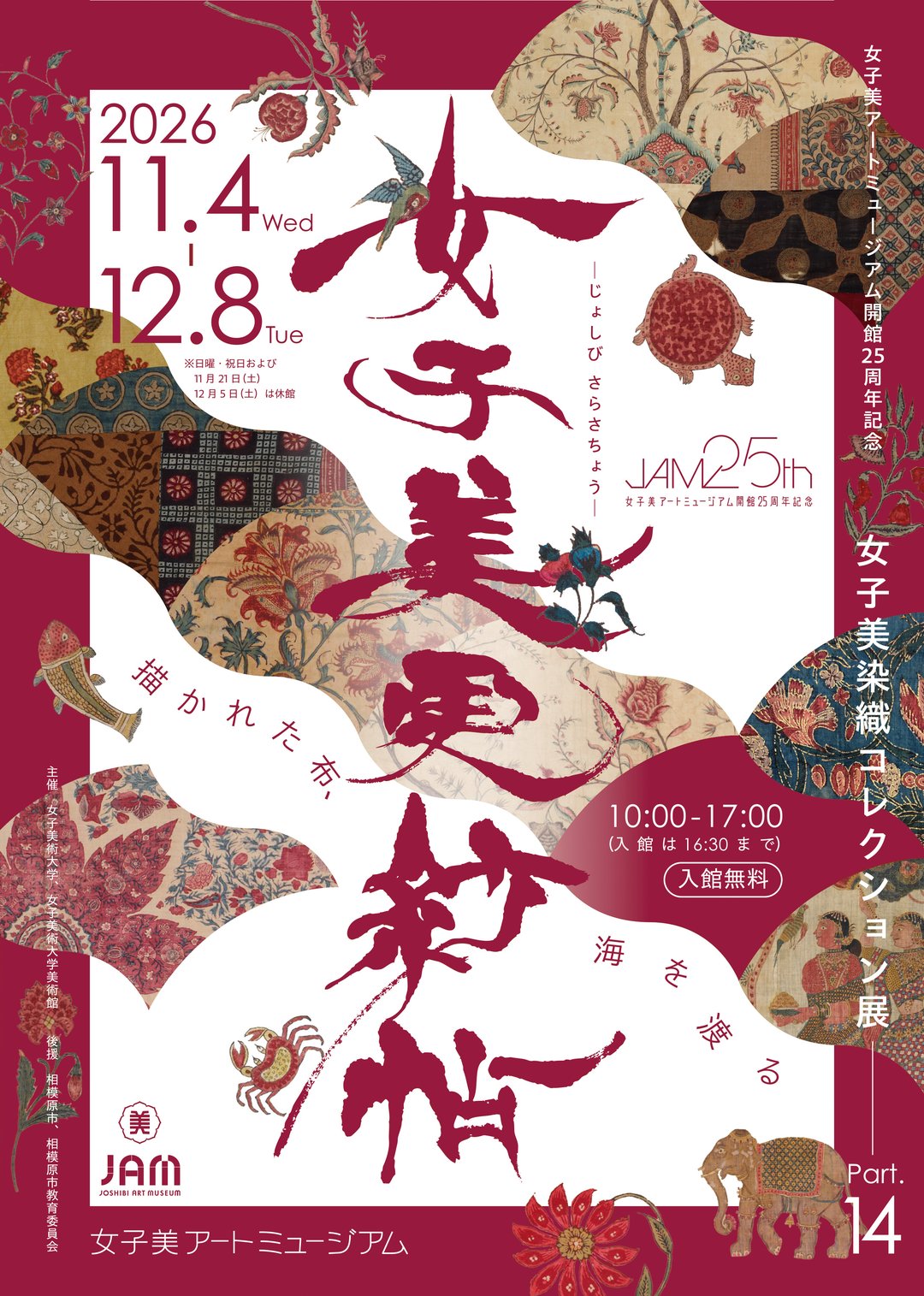
The museum marks 25 years since it opened with a special exhibition drawn from its own textile collection, turning the focus on sarasa — brightly patterned cotton cloth, hand-drawn or block-printed, whose main centre of production was India. Sarasa travelled to Egypt, Persia, Europe and across Asia, including Japan, where it was prized above all in the culture of the tea ceremony and of antiquarian collecting. Even a single small fragment was collected, appreciated and mounted into albums of cloth samples.
The exhibition introduces highlights from the sarasa held by the museum, including the Kosarasa-cho, one such album of fragments in its collection. Visitors follow the traces of handwork in cloth that was patterned as freely as a painting, and see how sarasa was loved across different cultures.