
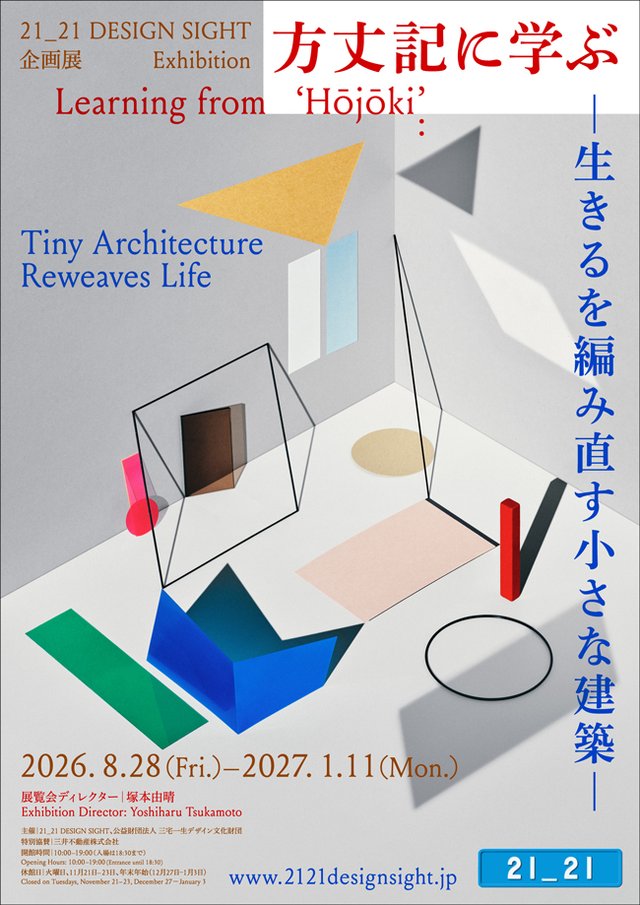
The exhibition takes the small dwelling described in 'Hōjōki', the early 13th-century essay by Kamo no Chōmei, as its starting point for re-examining contemporary life and the built environment. Chōmei's hut no longer exists, but his words have been revived again and again across the centuries and have generated many practices; the text is often called a true book of architecture for the way it asks what a home essentially is. Architect Yoshiharu Tsukamoto directs the exhibition.
Architects, designers, artists and companies each conceive their own 'hōjō-an', working from the scale of one jō square, roughly 9 square metres, to think through materials, structure and tools as devices for questioning how we live. The gallery holds research on the nature and daily life depicted in 'Hōjōki', together with several huts and the small paths leading to them. Visitors walk those paths and encounter the different huts along the way.
The project is not a reading of 'Hōjōki' itself. It looks at the life that appears between the text and us, and uses that to reconsider our own way of living.