
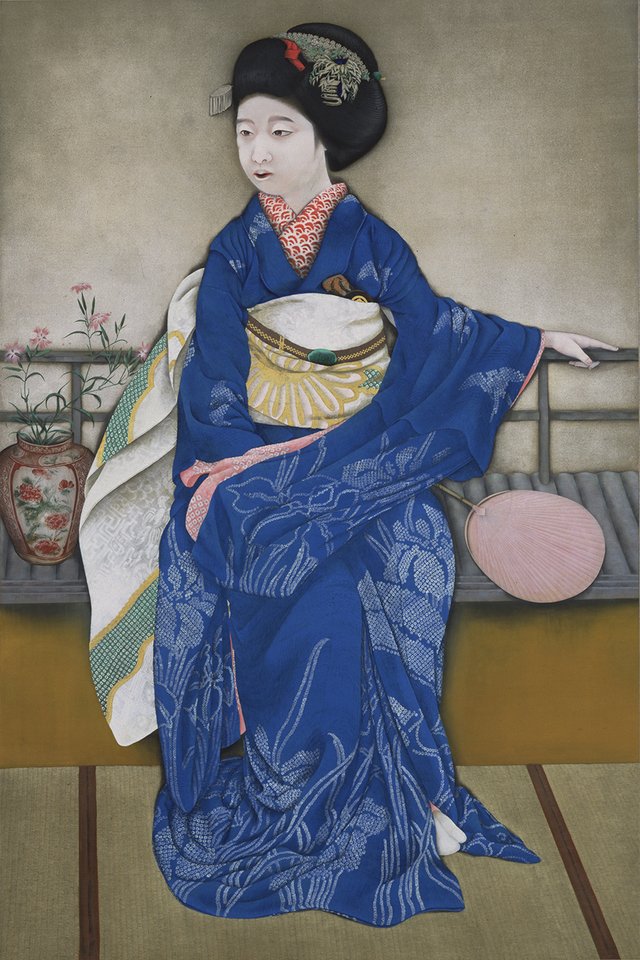
Hayami Gyoshu (1894–1935) worked as a Nihonga painter from the Taisho period into the early Showa years. Few painters of his generation resist being summed up by a single work: he began with painstakingly detailed realism that overturned accepted ideas of Nihonga, then moved into the avant-garde and even tried to express "truth" without looking at the subject at all. Each change of direction produced work of a different character, and the exhibition locates his individuality in the restlessness that kept pushing Nihonga's boundaries outward.
The National Museum of Modern Art, Tokyo has held and catalogued a body of rare Gyoshu materials — diaries, letters, and reference material on art and anatomy from Japan and abroad. Drawing on that work, the exhibition gathers around 100 essential works from collections across Japan and presents them in four chapters, reading his "innovation" afresh alongside the documents. With the sorting of his papers now well advanced, the process of solving the questions he left behind has only just begun.