
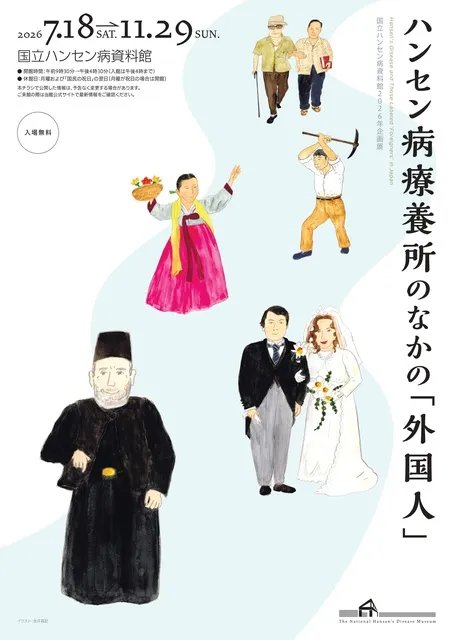
The exhibition focuses on people of overseas origin who were admitted to Hansen's disease sanatoriums in Japan. It is built mainly around materials concerning Korean residents, who formed the largest group among them, and also turns attention to patients with roots in Russia, Indonesia and Taiwan. Objects are organised by theme and shown together for the first time: tools used in harsh construction labour, records of the struggle to obtain pensions from 1959 onward, traces of daily life in which people tried to preserve their ethnic identity, costumes and instruments for traditional dance, and literary works.
Through these materials the exhibition conveys how people of diverse backgrounds fought and lived with dignity under a severe isolation policy, deepening understanding of the Hansen's disease issue and prompting thought about coexistence among different ethnic groups today. The exhibition uses the word "Korean" regardless of whether a person's registered nationality was North Korean or South Korean.