
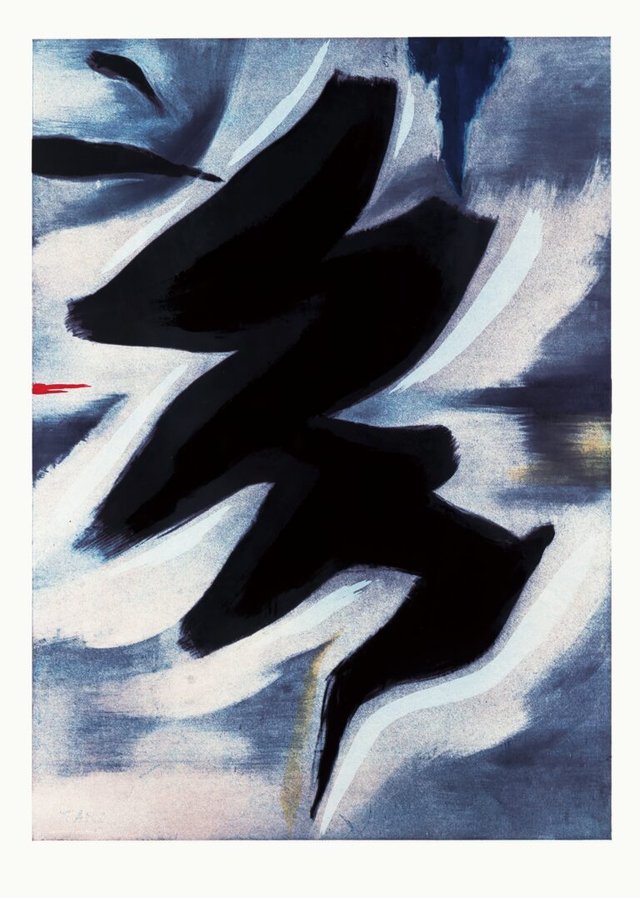
Taro Okamoto is often remembered as a painter of bold primary colours. When he resumed working in postwar Japan, he set those colours against a grey world that prized wabi-sabi, provoking the Japanese art establishment. In the 1960s he turned instead to a dynamic black.
Abstract black motifs resembling Sanskrit characters came to dominate his canvases, creating a dark and uncanny, almost magical world. Okamoto described choosing a black path, one that brings him face to face with death rather than leading him to ruin. For him black was a path, a way of living that went beyond colour.
The exhibition looks at this black side of Okamoto and also shows three works for the first time; they are said to have been painted at a ryotei restaurant in August 1961.