
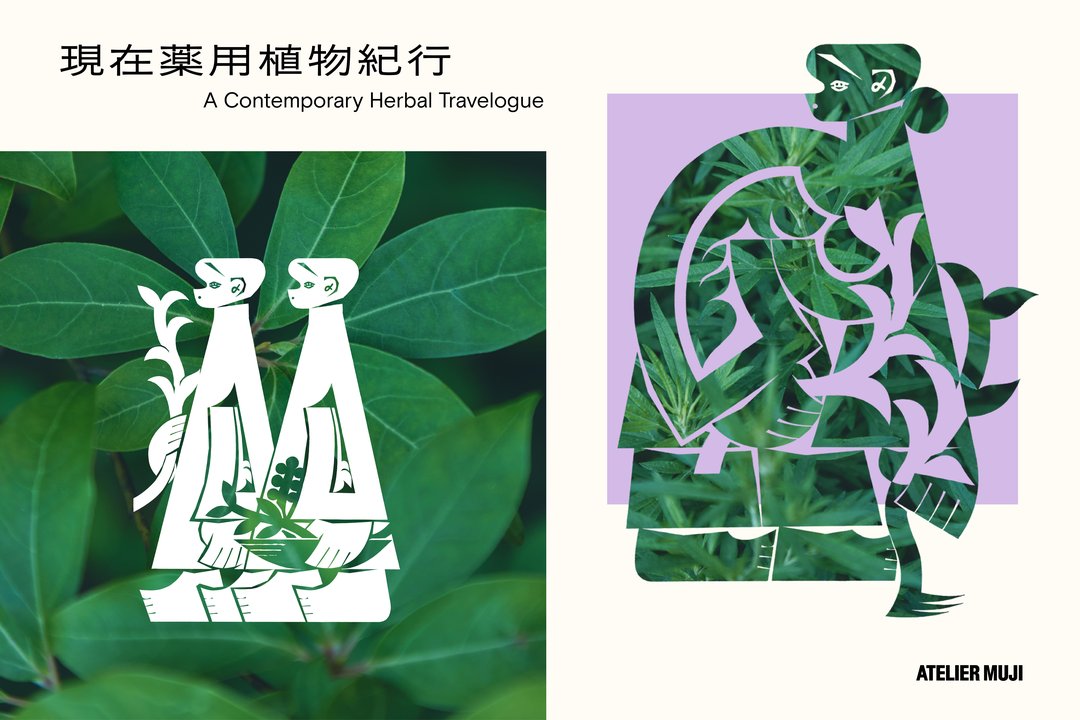
The exhibition takes medicinal herbs as its theme, noting how familiar they remain in daily life: mint used in poultices, ginger simmered into soups and herbal dishes that warm the body. Their origins run deep — many plants that may have served as medicine have been found at Jomon-period dwelling sites dating back ten-odd thousand years. Because the plants available differ by region, methods of use vary with local climate and custom.
The show presents the history, culture and knowledge of medicinal herbs, which earlier generations observed and tested and then folded into everyday life. Revisiting wisdom and ingenuity that already exist close at hand, and finding ways to bring them into daily living, connects to how Muji approaches making things. Rather than only taking in what is new, the exhibition aims to be a place to look again at what is already nearby and to search for a richer way of living.
On display are actual specimens of medicinal plants from all 47 prefectures, interviews from journeys with herb researcher Rie Nitta to visit producers and tradition-bearers around Japan, and exhibits that reconsider what is close at hand through present-day health practices and handwork.