
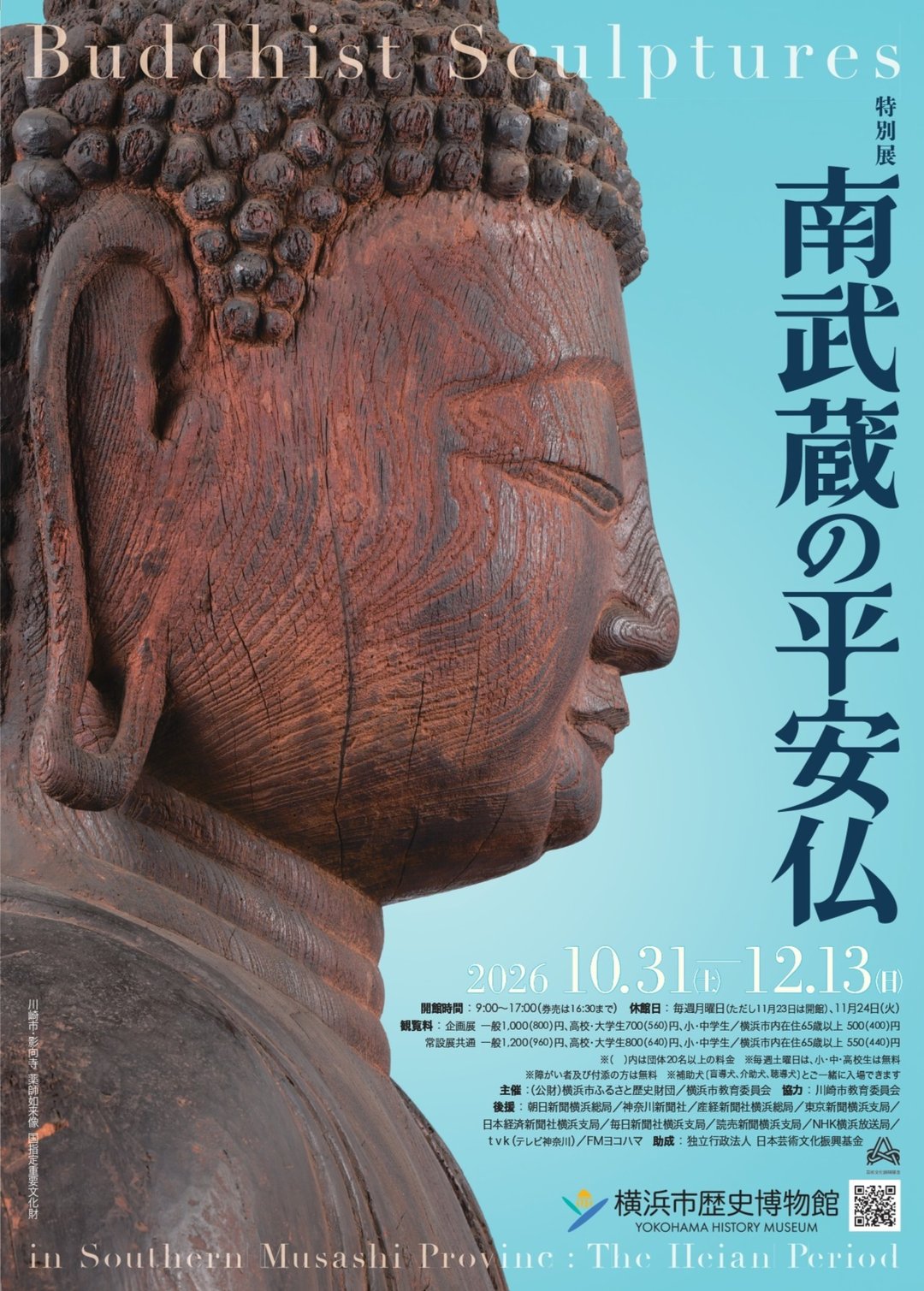
The area south of the Tama River in the old province of Musashi, roughly today's Yokohama and Kawasaki, was divided into the three districts of Tsuzuki, Kuraki and Tachibana. Buddhist statues from the 11th and 12th centuries, the late Heian period, have survived in this region. The images have varied backgrounds.
Some are thought to have belonged to the district temples that served as local centres; others appear to have been enshrined in small temple halls within settlements. Some adopt the gentle, graceful forms of the Japanese-style carving that spread in the late Heian period, while many others show the simple, broad modelling inherited from the strongly regional sculptural tradition of the preceding age. The exhibition examines these characteristics and the historical background of the southern Musashi Heian Buddhas, and explores the state of ancient Buddhist culture in the region.
A lecture series, a Buddhist sculpture viewing workshop, an ikebana workshop and gallery talks accompany the exhibition; details and application methods are on the museum's official website.