
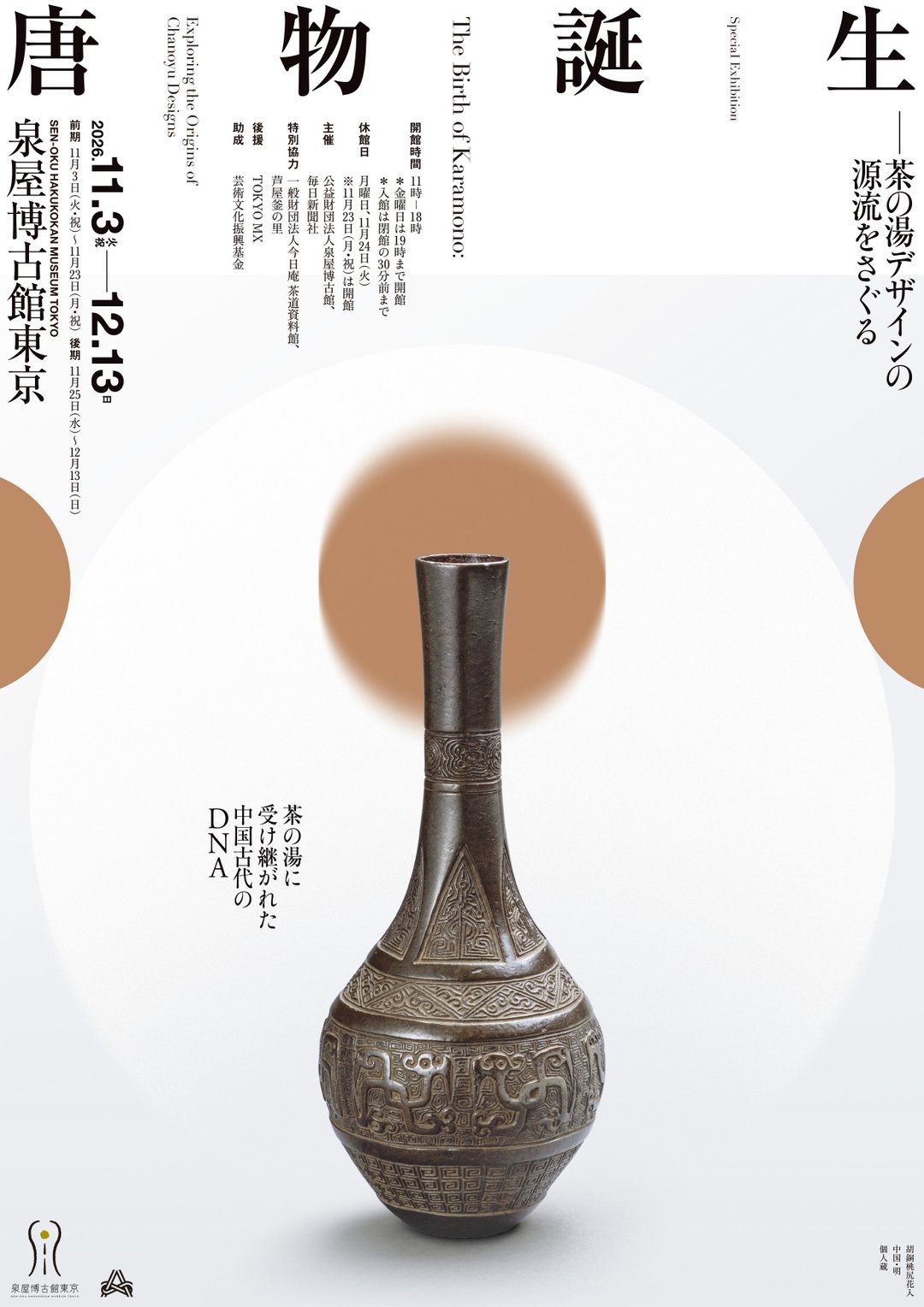
Tea drinking reached medieval Japan through exchange with the continent, and in time it grew into chanoyu, a distinct cultural tradition of its own. The utensils used for tea, and the objects that adorned the tea room, included Chinese works of art and craft known as karamono, which were highly prized. Selection by the values and aesthetic sensibilities of the people of the time produced pieces that came to be esteemed as meibutsu, celebrated famous objects.
The exhibition traces the process by which karamono came into being, reaching back to ancient China. Taking as its starting point flower vessels in the material called kodō, an old form of bronze, it looks at metalwork, ceramics and lacquerware together, focusing on qualities shared across materials, and attempts to reposition the design of chanoyu within the cultural history of East Asia. A special section examines the casting techniques of kodō, which have remained unexplained until now, and presents the latest research findings.