
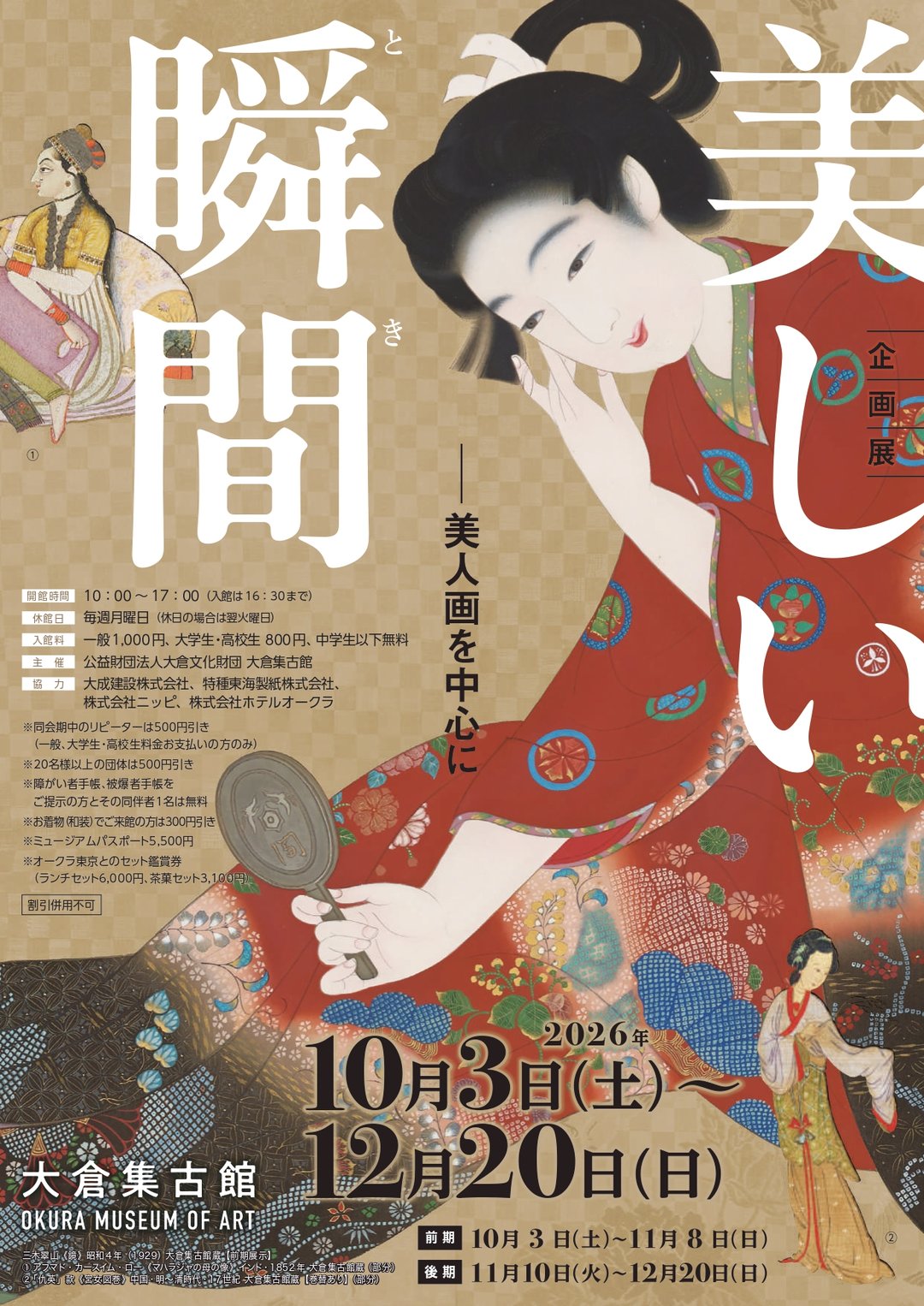
Paintings of women have a long history in Japan, reaching back to the Asuka period, but they became far more common in Edo-period ukiyo-e, and in modern Japanese painting from the Meiji era onward the word bijinga, or picture of a beautiful woman, emerged as a genre in its own right. In these images, outward beauty was expressed through clothing, hairstyles and ornaments, and through them reflected social rank and position, the mood of the age, and even differing standards of beauty from country to country. Inner beauty was conveyed not only through gesture and appearance but through the seasonal flowers, plants and scenery painted alongside the figure.
For the Japanese in particular, beauty has been said to reside in nature, and people's lives and feelings were set against the natural world as it shifted from spring to winter. The exhibition brings together bijinga and landscape paintings made in Japan, China and India between the 17th and 20th centuries, along with costumes and cosmetics, presenting around 70 works under the themes of the figure of the beauty, theatre and beauty, the seasons and beauty, and objects depicted with beauties.