
The park spreads around a pond that was built in the Edo period as a reservoir for farming. It was designated a Tokyo metropolitan scenic spot in 1998 and named one of Japan's 100 historic parks in 2007. Maples, ginkgo and cherry trees around the water turn colour, and the woodland on the outer edge shifts to yellows and browns.
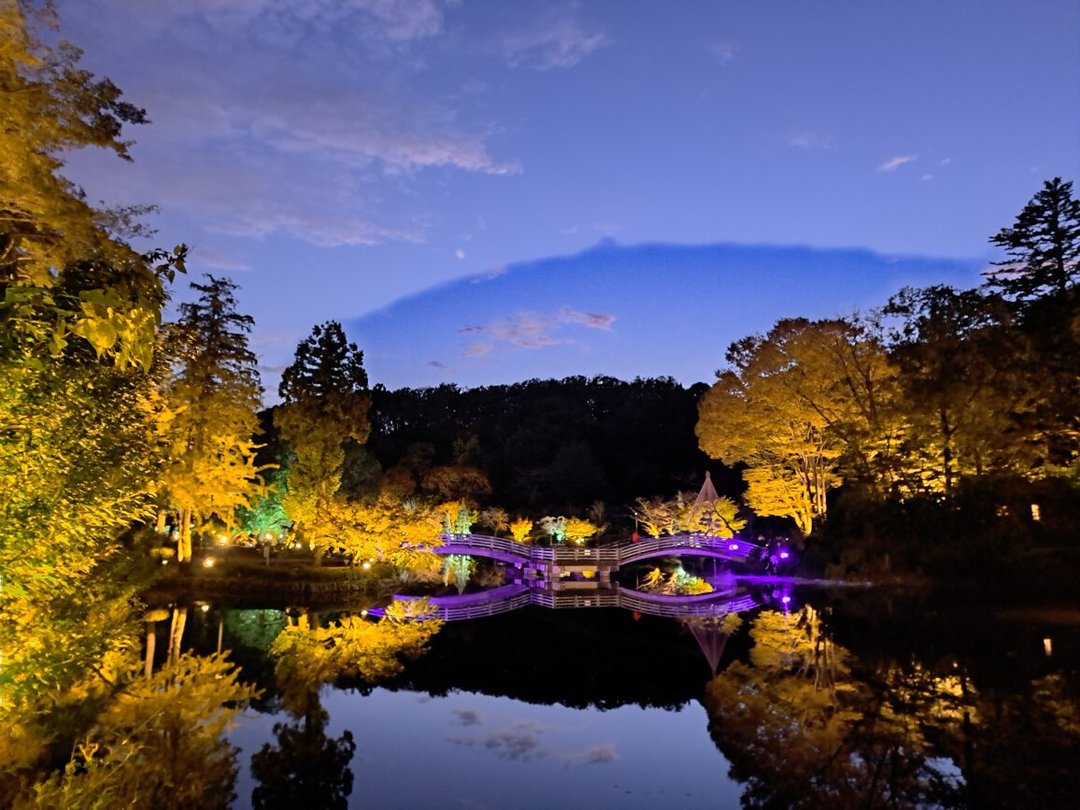
The Taiko Bridge crosses the pond, and Edo-period farmhouses have been relocated into the grounds, so coloured trees and historic scenery can be seen together. The neighbouring Nozuta Yakushi-do hall has a giant ginkgo said to be more than 500 years old, and its yellow leaves can be viewed across the pond. A autumn-leaf festival is held each November.
During the night opening, maples along the pond and the great ginkgo at Yakushi-do are lit up, and on still nights the Taiko Bridge and the moon reflect clearly on the water. A sea-of-clouds effect is also produced: mist released around the pond drifts across the surface so the bridge appears to float in the air. The mist rises every hour and can be seen from the daytime hours as well.