
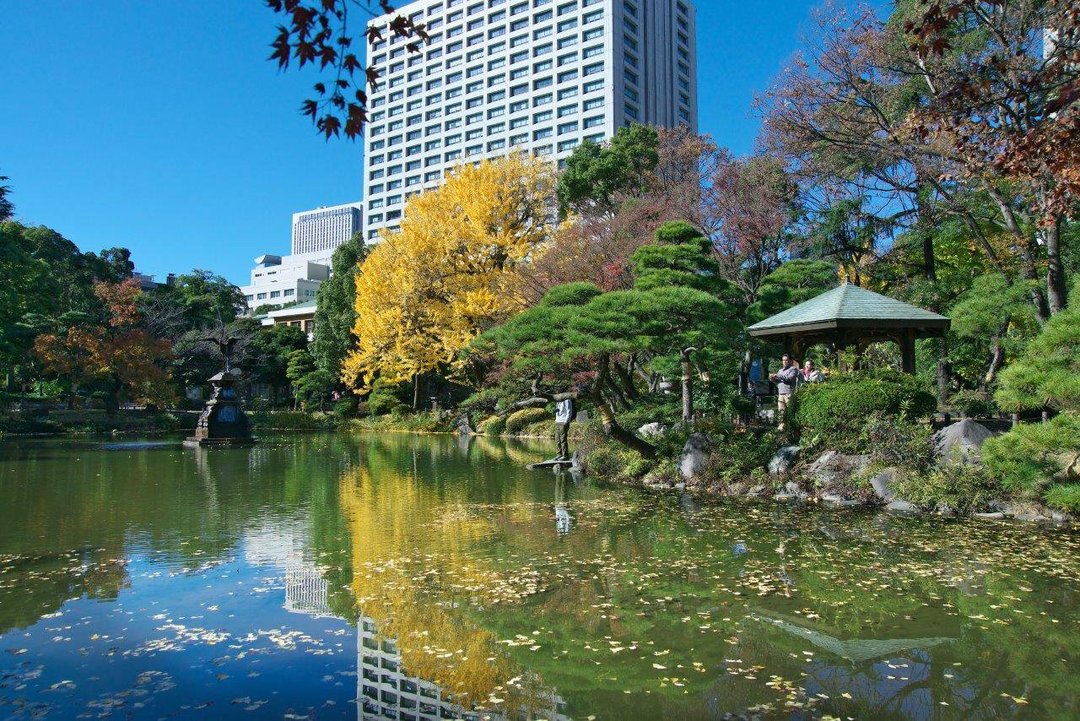
Hibiya Park began as the site of daimyo residences in the Edo period and became an army drill ground in the Meiji era, before being planned and laid out as one of Japan's first modern Western-style parks. Flower beds carry colourful seasonal blooms through the year, making the park a resting place for people working in the surrounding business district. The ginkgo avenue along the S-shaped paths, which follow the design of the park's 1903 opening, turns a striking yellow in autumn.
Around the cloud-shaped pond, home to a crane fountain said to be the third oldest fountain in a Japanese urban park, the maples and ginkgo are at their best from autumn into winter. Among the trees is the huge "Kubikake Ichō" (neck-wager ginkgo), named for the story that the park's designer, Dr. Seiroku Honda, staked his position on successfully transplanting it.