
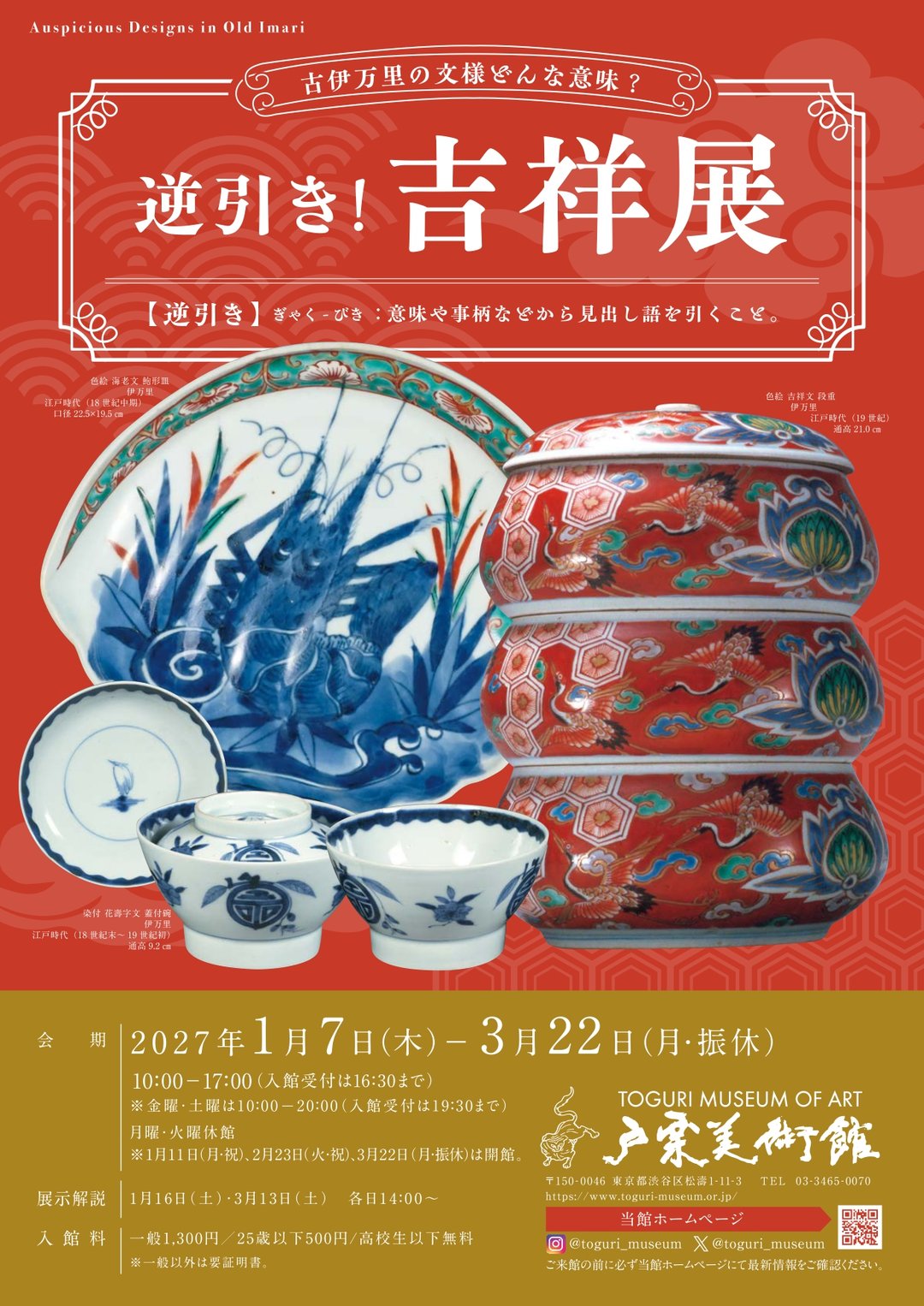
The Toguri Museum of Art holds its first exhibition devoted to auspicious motifs in 18 years. In Japanese, kissho means a good omen or a lucky sign; such symbols appeared in many settings in daily life over the centuries, and several are still familiar today as engimono, objects believed to bring good fortune. Imari ware, which developed alongside people's lives through the Edo period, carries many patterns that hold auspicious meaning.
Around 80 pieces of old Imari from the museum's collection are shown, among them motifs such as the crane, the character for longevity and the pomegranate. The wares are grouped not by pattern but by the kind of good fortune they express, among them long life, happiness and the prosperity of one's descendants, so that the meaning behind each design can be read back from the object.