
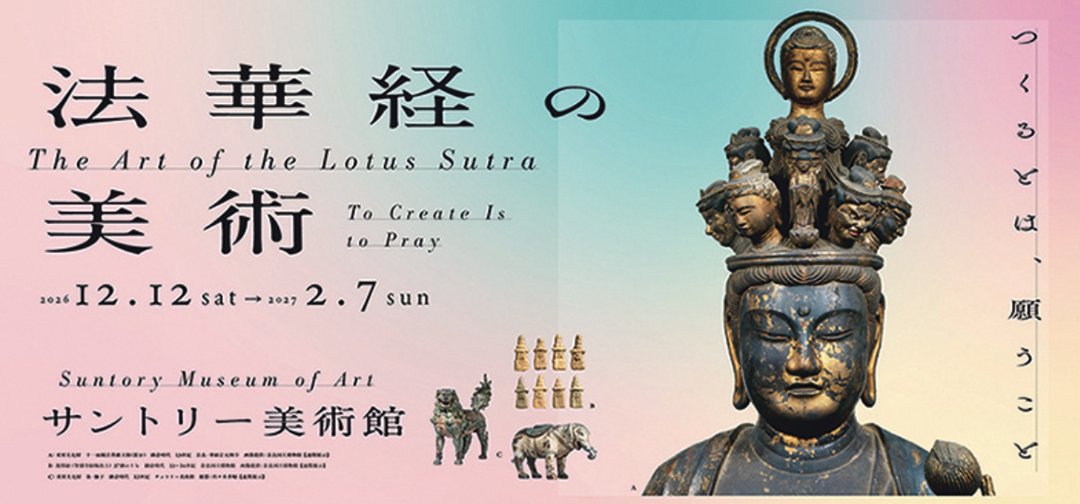
The Lotus Sutra teaches that everyone can attain Buddhahood equally, and that the Buddha saves people from the sufferings and misfortunes of this world. Formed in India by around the 3rd century, the sutra reached Japan via China and the Korean peninsula in the Asuka period, and has since been widely worshipped regardless of age, gender, rank or whether one was a monk or a layperson. For people in Japan the sutra was a support for living: a way to overcome everyday hardship, live in peace and hope for rebirth in the next world.
The many works of figurative art made on the basis of the Lotus Sutra convey that faith to the present day. The sutra describes acts of making — copying and decorating the text, building temple pagodas, creating Buddhist statues — as good deeds (kuzen) needed for salvation, and faith developed together with such making. The exhibition focuses on these acts of kuzen and presents masterpieces of Lotus Sutra art from ancient to early modern times under three themes: building pagodas, copying sutras and dedicating them, and making images.
It also looks at the Lotus Sutra faith of early modern painters and its relationship to their creative work, unravelling the wishes people entrusted to making things.