
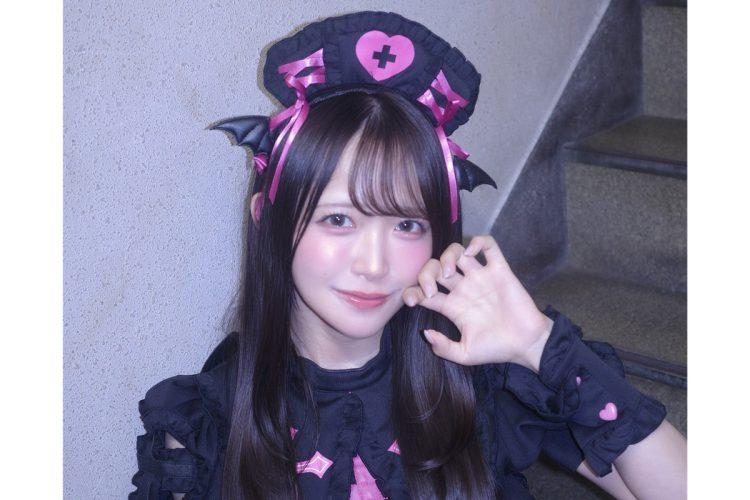
A Japanese voice actor's Halloween cosplay has drawn criticism from outside Japan, after she posted photos of herself with her face painted black. Hazuki Sakata, known for playing Miyu Sakurada in the anime D4DJ and Mana Junta in BanG Dream!, posted on X on October 31 under the words "Happy Halloween." She was dressed as Shaun from the British animated series Shaun the Sheep.
Sakata had painted her face black and wrapped white cotton around her head and body. Some replies praised the costume as "too perfect" and "the best." Others asked whether the look amounted to a racial slur.
Comments on the post had passed 1,300 as of November 2, with opinions arriving in several languages. Some defended her, saying the costume was not discriminatory.
A reporter on the international desk of a national newspaper said the makeup is known as blackface — a non-Black performer darkening their skin to play a Black person. The reporter pointed to a year-end TV program in 2017, when Downtown comedian Masatoshi Hamada appeared made up as Eddie Murphy and overseas media asked whether it amounted to anti-Black discrimination.
The combination of darkened skin and cotton was a particular problem, the reporter said, because many enslaved Black people in the US were forced to work in cotton cultivation.
Where blackface comes from
Fumiko Sakashita, a professor at Sophia University who specializes in African American history and culture, traced the practice to minstrel shows, a form of popular entertainment in the US in the 1830s and 1840s.
“White male performers painted their faces black and comically played "Black people living under slavery." The shows promoted racial stereotypes and also served as propaganda that justified slavery, by suggesting Black people could live happily under the protection of white people.”Sakashita said
Blackface therefore carries a long history of discrimination, she said, and cannot be reduced to the idea that it is merely rude to imitate a Black person without being one.
Asked whether the makeup should be avoided even when no discrimination is intended, Sakashita said the case in question was a costume of a black sheep.
“I don't necessarily think it should be a target of criticism.”Sakashita said
She added that the comedian Naomi Watanabe has impersonated Beyoncé without changing her skin color. Sakashita said it is worth asking whether skin color really needs to change when dressing as a particular celebrity or character.
“If someone impersonating a white person wore a false nose to make it look taller, some people might sense a discriminatory intent. Exaggerating and simplifying physical features associated with a race can be problematic for any race.”Sakashita said
Many on social media questioned whether a black sheep costume should be tied to discrimination at all. The episode has shown again that the intent of the performer and the reading of the audience do not always match.