
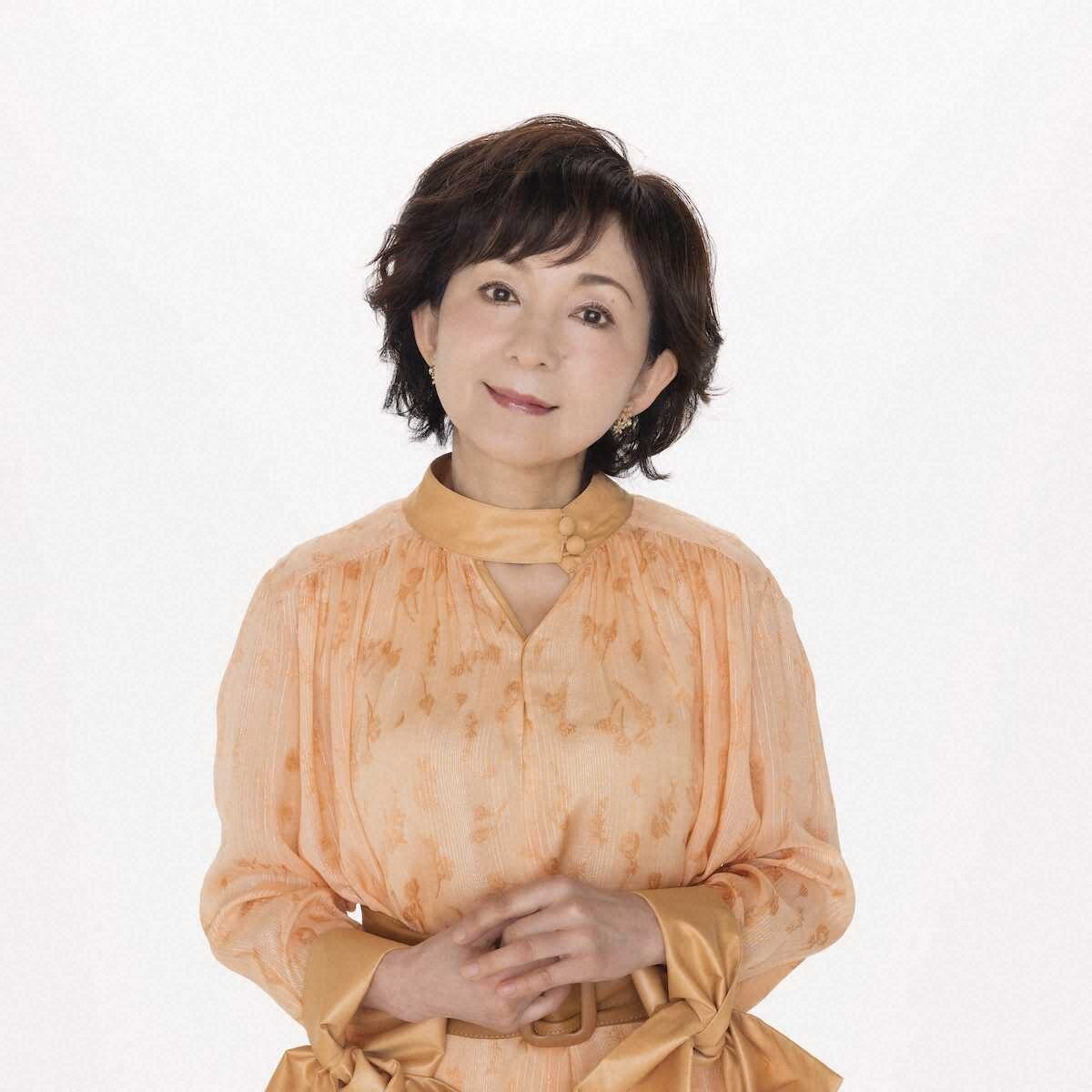
Singer Hiromi Ota, whose hits included "Cotton Handkerchief" and "Farewell Trans-Siberian Railway," died at her home in Tokyo on the 12th of breast cancer at 71, her husband, music producer Tomohiko Fukuoka, said on the 18th.
Ota, whose real name was Hiromi Fukuoka, was born in Tokyo. She announced in 2019 that she had breast cancer, and the cancer had spread to her brain in 2024.
Fukuoka told Sponichi Annex in an interview in Tokyo that the family had held a private funeral for her on the 18th. She had been receiving care at home for about three months.
"She passed away quietly, as if asleep," he said. "She had shown every intention of returning to the stage, but… she was a vibrant person."
A voice from the Showa songbook
Ota's clear, sweet falsetto and slightly lisping delivery stayed with a generation of listeners. "Cotton Handkerchief," released in 1975, became a million-seller.
The song, written by Takashi Matsumoto with music by Kyohei Tsutsumi, is a dialogue between a woman leaving for the city and the man she leaves behind. Its final verses turn the handkerchief into a farewell gift.
She released 10 singles in her first four years, all written by the Matsumoto-Tsutsumi pair. Hits followed, including "September Rain" and "Farewell Trans-Siberian Railway."
From piano lessons to the stage
Ota began piano lessons at 8 and joined a school choir in elementary school. She went on to a combined junior and senior high school with a vocal music department.
In 1969, in her third year of junior high, she passed an audition for the School Mates, a troupe of idol hopefuls. She wanted to meet Kenji Sawada of the Tigers, she said.
She won an audition program in 1973 and signed with Watanabe Productions. She made her debut on November 1, 1974, with "Amadare." Because she could sing to her own piano accompaniment, she was marketed as both an idol and a folk singer.
She married Fukuoka in 1985, and the couple had two sons.
Illness and a promised return
Ota's breast cancer was of the type called triple-negative, for which drug treatment options are limited. When no spread or recurrence was confirmed, she resumed her music career.
In April 2024 she announced on her official website that she would suspend activities for the year. She did not name her illness, but said she had been helped by ZAP-X, a cutting-edge brain treatment system that treats without surgery, suggesting she had been treated for a brain tumor.
According to Fukuoka, her last work was in March 2024. The cancer spread to her brain in April, and she entered full-time treatment.
On November 1 last year, the anniversary of her debut, she posted a message on her official social media. "My condition hasn't changed much, but I'm alive. Wait for me," she wrote, pledging to stand on stage again.