
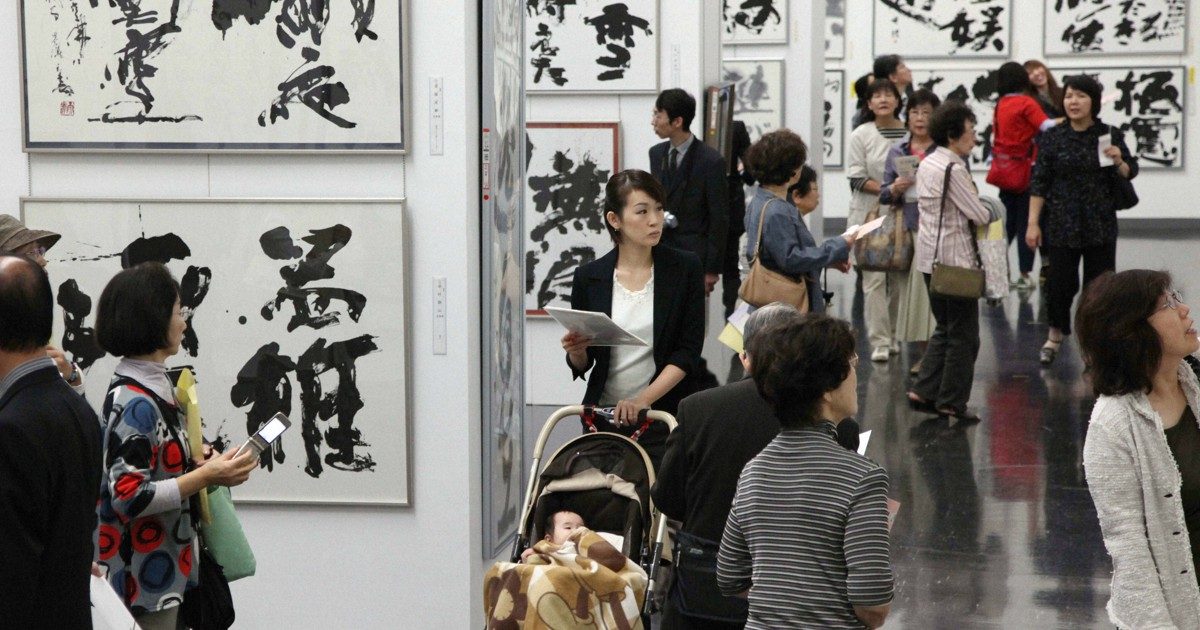
Japanese calligraphy, or shodo, is set to be registered as UNESCO intangible cultural heritage, and calligraphers in Hokkaido have welcomed the prospect. Organizers and teachers connected to the Mainichi Shodo Exhibition's Hokkaido show, run by the Mainichi Shimbun and the Mainichi Shodo Association, said the listing comes at a difficult moment for the art.
"It is a joy in this age of digitalization," one supporter said, according to the Mainichi Shimbun. Others said they hoped the recognition would help reverse the shrinking number of people who practice calligraphy.
Watanabe Mitoaki, a 78-year-old director of the Mainichi Shodo Association, said the listing should push practitioners to guard the craft itself. "Now that the wave of digitalization and AI has arrived, we must use this registration as an opportunity to firmly protect the technique of writing by hand," he said.
A Hokkaido lineage
Hokkaido has produced calligraphers who shaped the art nationwide. Kaneko Otei (1906-2001), born in Matsumae, proposed kinkin shibunsho, a style that takes everyday language and contemporary poetry and tanka as its subject matter, and is credited with opening a new era for calligraphy.
Among his students is Nakano Hokumei, 103, a supreme adviser to the Mainichi Shodo Association. Nakano was born on Yagishiri Island in Haboro and lives in Sapporo.
Watanabe, who has helped judge member prizes at the Mainichi Shodo Exhibition, worries that the hard groundwork of the art is being undervalued. "Today, 'writing for fun' is emphasized, and the painful basic practice tends to be taken lightly," he said.
He added that calligraphy's form has to keep adapting to the times. "I want many people to know, through this intangible cultural heritage registration, the soul that calligraphy has, something produced by human life that AI cannot imitate," he said.
Takino Kisei, 79, chairs the Hokkaido Calligraphy Federation, which was founded in 1955 to promote calligraphy across schools and genres in the prefecture. After holding an exhibition in Paris in September, he said visitors told him how wonderful calligraphy is. "I felt that calligraphy had gained that much standing among the public," he said.