
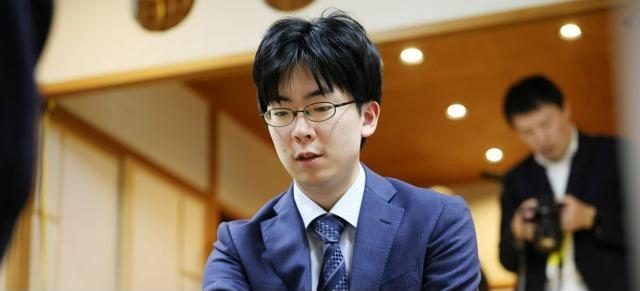
The seventh and final game of the 51st Meijin title match resumed at 9 a.m. on Oct 29, 2026, at the Sakahijiri Gyokushoen inn in Izu, Shizuoka Prefecture, with defending champion Iyama Yuta, 29, and challenger Shibano Toramaru, 26, tied at three wins each. Whoever takes the game takes the title.
Iyama, playing black, is bidding for a third straight Meijin. Shibano, the Kisei titleholder, is seeking his fourth Meijin and his first since 2023. The best-of-seven, sponsored by the Asahi Shimbun, is the third consecutive final between the two.
Each player has eight hours of thinking time. On day one, Iyama used 4 hours 9 minutes and Shibano 3 hours 21 minutes. The referee is Kataoka Satoshi, 9-dan, 68. Suzuki Shinji, 8-dan, 35, provides newspaper commentary, and Tsuruyama Atsushi, 8-dan, 45, handles the YouTube broadcast.
A fight that would not end
The game went into open combat from move eight, when Shibano approached in the upper left and Iyama cut. The skirmish spread across the board rather than settling into the usual opening patterns. Iyama captured ten white stones on the left side, but Shibano struck back at the weak points of the surrounding black group, and by move 93 the large white chain running from the center to the lower side had become the target.
Suzuki called Shibano's move 94 a probing play, one that lets the challenger choose a plan depending on how Iyama answers. "The direction of the game changes with the champion's next move," he said.
Iyama sealed his move overnight. When Kataoka opened the envelope on the morning of Oct 29, the champion played black 1 at the point the study group had rated strongest: a move that turns up the pressure on Shibano's large white group. The AI, however, had favored a different move. Tsuruyama called it "the most natural response," and Suzuki said, "A human plays here."
The fight winds down, the counting begins
After the lunch break, Shibano answered with white 1 and defended the left side at white 7. Pushing through at the point marked A would have extended the running battle, but the challenger chose to pull back, and the fighting finally subsided.
The AI's evaluation of the challenger's position dropped once he declined that push, and it now gives Iyama the lead with a 70% win rate. A vast open space remains on the right side, though, and both commentators see the game as far from settled. Suzuki said white's territory looks larger on the board but wondered how many moves black has left inside the white framework on the left. Tsuruyama was blunter: "It is completely difficult."
Shibano took 10 minutes after play resumed at 1 p.m. before playing move 116, and a struggle began in the upper left. Both players chose sansai soba for lunch. Suzuki, who sampled it, said the broth had a solid flavor and the mountain vegetables offered enough variety of texture to keep the dish interesting.
A 16-year-old makes history
The day before the decider, the Go world had other news. Yanagihara Saki, 2-dan, won the 51st Shinjin-O, the title for young professionals, at 16 years and 0 months, the youngest winner in the tournament's history. She is the second woman to take the title, after Ueno Asami, now 25 and holder of the women's Meijin, in 2023. Iyama and Shibano both appear on the list of past winners.
Yanagihara plays in Li LEAGUE, the team competition for women professionals, where her coach is Tsuruyama, the same 8-dan commentating on this game. She turned professional at 12 in 2023 and had been tipped for the top since before she started school. Tsuruyama said she struggled through trial and error early in 2026 but has been steadily improving. "She has finally been able to show that strength," he said.
He wants her to break the hold of the three strongest women players, Fujisawa Rina and the Ueno sisters, Asami and Risa, and win a women's title. Beyond that, he said, she should aim for a place in the league of a mixed open tournament.
Her win comes as a younger generation pushes at the top. In July 2026, Fukuoka Kotaro, 20, took the Honinbo title from Iyama and is now challenging for the Oza. Tsuruyama said the "three crows" group that included Hsu Chiayuan, 9-dan, had long blocked the way for players of that age, but one breakthrough encourages others. "When young players keep coming out, the Go world gets more exciting," he said.
“I want them to fight it out to the end.”Kataoka Satoshi, referee, speaking on the Go-Shogi TV broadcast
Kataoka, appearing on Go-Shogi TV after opening the sealed move, said the fight that began at move eight showed no sign of stopping. Tsuruyama replied that a half-point result would be the best possible finish, since everything is worth watching in a final game. Kataoka laughed and said that would make life hard for the newspaper commentator.