
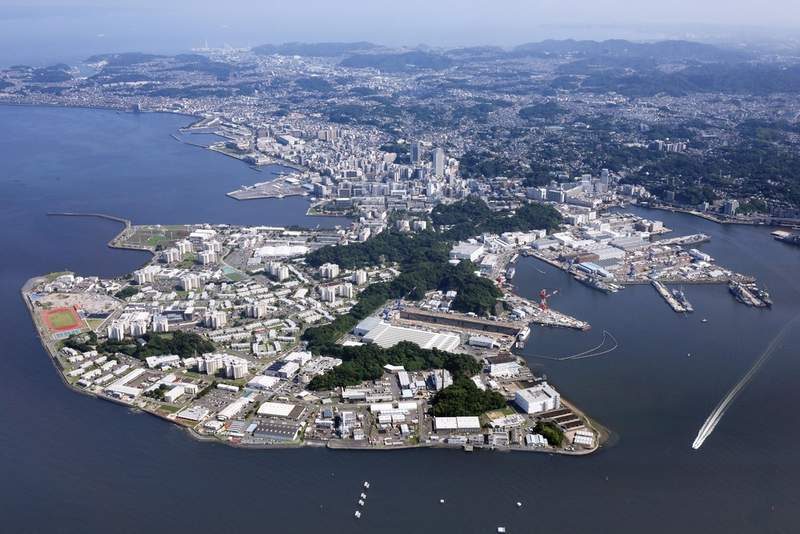
A 46-year-old former Sumitomo Corporation employee who entered Yokosuka Naval Base about 30 times on a forged US military ID told the Yokohama District Court he did it out of a childhood dream of serving in the US military, 47NEWS reported.
The man was arrested by Kanagawa prefectural police after entering the base in Yokosuka, Kanagawa Prefecture, in February. He was working for Sumitomo Corporation at the time.
Investigators suspected he might be a spy rather than a military enthusiast, given his trading house job. In court, he said neither money nor military intelligence was behind the entries.
A forged card that passed the gate
He was indicted in March on charges of violating the Criminal Special Measures Law and of using a forged private document bearing no seal.
The charges cover entering the base posing as US military personnel in October and November 2025. In November, he handed the forged ID to a police officer who asked for identification during a parking violation procedure.
Article 2 of the Criminal Special Measures Law, which accompanies the Japan-US Status of Forces Agreement, bans entering US military facilities and areas without just cause.
Prosecutors told the court he found a website selling replica IDs around 2021 and ordered a forged US military card bearing his own name. He first tested it at a gate at Camp Zama in Kanagawa Prefecture, where it was scanned without problem and he got onto the base.
He went on to enter Yokosuka, Atsugi and other US bases and facilities, using restaurants, hotels and rental cars there. Around 2023 he bought a forged card in the latest format.
Questioned by his defense lawyer, he said he had learned how to get onto bases during his time studying in the US. A card arrived at his home by mail with a randomly assigned ID number after he sent his name and photo, and he could choose Navy or Army affiliation.
He said he kept the card for about half a year before using it. Guards check IDs visually at the gate, and the scrutiny varies from person to person, he said. "As far as I knew, it was made very precisely," he said.
A dream cut short by 9/11
He told the court he spent summers from the upper grades of elementary school through the third year of junior high staying with the families of US service members stationed in Japan. Hearing about their work, he came to dream of serving in the US military himself.
He studied at a US university and spent five years in an Army officer candidate program, training early in the morning and at weekends alongside his classes. The September 11, 2001 attacks changed US rules and put the goal out of reach, he said.
"I chased that dream the whole time and suffered a great setback," he said. "I am happy that my peers have been commissioned as officers, but it was frustrating."
After returning to Japan he joined Sumitomo Corporation. His interest in the US military revived when he began working on defense equipment.
Wife and dog brought along
He bought a forged ID for his wife as well and began entering bases with her and the family dog. Asked why, he said he wanted his wife to experience something he loved.
He told his wife she had the right to enter the bases and told colleagues at work that he held official credentials. Pressed on whether he had worried about what would happen if they were caught, he said the thought had crossed his mind, but that he had wanted to be together with her.
He said he had been under the illusion of his days as an officer candidate in the US. "I made light of reality, even though I was in a position where I should not have entered," he said.
He said his interest in the US military would not revive. "I have lost many things as the price, and I never want to go through this again." Sumitomo Corporation dismissed him, ending his career there.
Suspended sentence
Prosecutors sought 10 months in prison, saying he had entered about 30 times and shown a habitual pattern, treating the visits like sightseeing and acting for frivolous, selfish reasons.
The defense argued the places he visited were general commercial facilities, including food courts, a dog run and open spaces, and that he had no unlawful purpose. It sought a suspended sentence and said investigators had questioned him as a suspected spy.
In his final statement, he said he fully understood his acts were unforgivable. "If I am given time, I want to support my wife and start my life over."
On June 18, about a month after the first hearing, Judge Yasuaki Takahashi sentenced him to 10 months in prison, suspended for three years. The court cited his admission of the facts, his remorse and his wife's promise to supervise him.
He listened in silence for about five minutes as the verdict was read and bowed at the end. Neither side appealed, and the sentence was finalized on July 3. He shredded the forged ID himself before his arrest.