
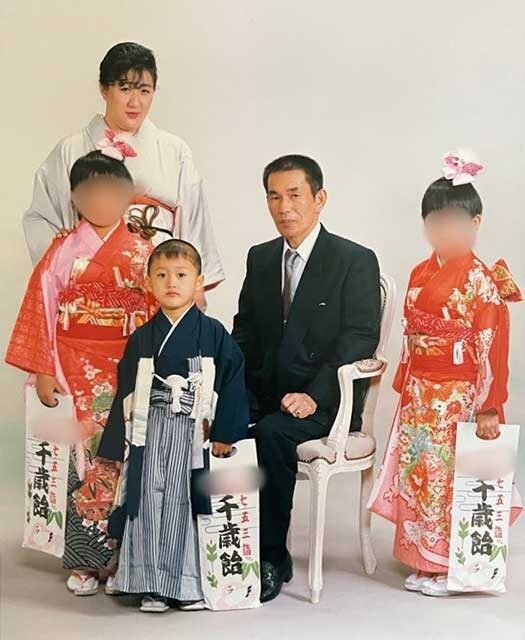
Twenty-eight years after poisoned curry killed four people, including schoolchildren, at a summer festival in Wakayama, the eldest son of the woman convicted of the murders still argues she is innocent. Masanori Hayashi, 65, was sentenced to death in 2009, and the sentence has not been carried out.
Her son, identified only as Koji, 39, has spent 17 years as the child of a death row inmate. He told Shukan Playboy, in an interview the magazine published, that he chose to stay in Wakayama and keep pressing his mother's case rather than leave.
The four Hayashi children were sent to children's care homes after the murders. Koji has described years of slander and bullying, and obstacles to schooling, employment and marriage that followed the family.
A family reduced
His elder sister died in June 2021, driving a car with her child off the Sky Gate Bridge at Kansai International Airport into the sea. His father, Kenji Hayashi, died in June this year of a neuroendocrine tumor of the right lower lobe of the lung. He was 81.
Two younger sisters have distanced themselves from the case. Koji is the only member of the family who has kept up prison visits and exchanged letters with his mother, and he now faces the public alone.
Three requests for retrial
Masanori Hayashi has filed three requests for a retrial since her death sentence was finalized in 2009. Koji has argued that no firm evidence established a motive for the crime or supported the confession she gave after arrest.
The 1998 case, in which curry served at a community event in Wakayama was laced with arsenic, shocked Japan as a random mass killing. The conviction of the mother of four made her one of the country's best-known death row inmates.