
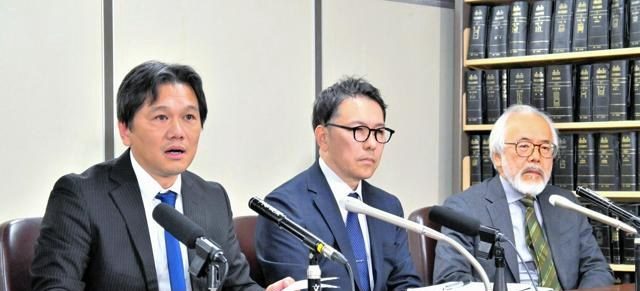
A Tokyo District Court hearing into a lawsuit over the Okawara Kakoki wrongful-prosecution case has put judges' refusal to release a sick former adviser on trial, as his family asks who answers for a detention the court itself has called unlawful.
"If illegal investigation was going ahead, why couldn't the court stop it?" the second son of the former adviser testified at the Tokyo District Court on October 30, the Asahi Shimbun reported. The suit targets what is known as "hostage justice" — a structure in which suspects who insist on their innocence are held for long periods and pressed to confess.
The former adviser was arrested and indicted for a crime he did not commit. He fell ill in detention and died of cancer.
Arrests over an export license
Metropolitan Police Department public security officers arrested the president of Okawara Kakoki, a machinery maker based in Yokohama, and the former adviser along with one other person in March 2020. The three were suspected of violating the Foreign Exchange and Foreign Trade Act by exporting spray dryers without a license.
The president and the others denied the charges. They were held in detention for up to about 11 months.
Detention restrains the body of a suspect or defendant. Prosecutors request it and a court decides whether to grant it. The Code of Criminal Procedure allows it when there are reasonable grounds to suspect evidence will be destroyed, among other conditions.
Bail refused again and again
Being arrested, indicted and detained despite innocence is a serious violation of human rights. What made this case especially grave was that the former adviser, Shizuo Aishima, died while his access to adequate medical care was restricted.
The defense filed for bail repeatedly. Prosecutors objected, citing the risk that evidence would be destroyed, and the court followed their arguments and turned down each request.
- In the Okawara Kakoki wrongful-prosecution case, the president and others were held for long periods from arrest through indictment.
- Illegal investigation by police and prosecutors came to light, and the court also rejected bail requests repeatedly.
- A lawsuit has been filed over the judges' responsibility, raising questions about a court that avoids examining its own handling.