
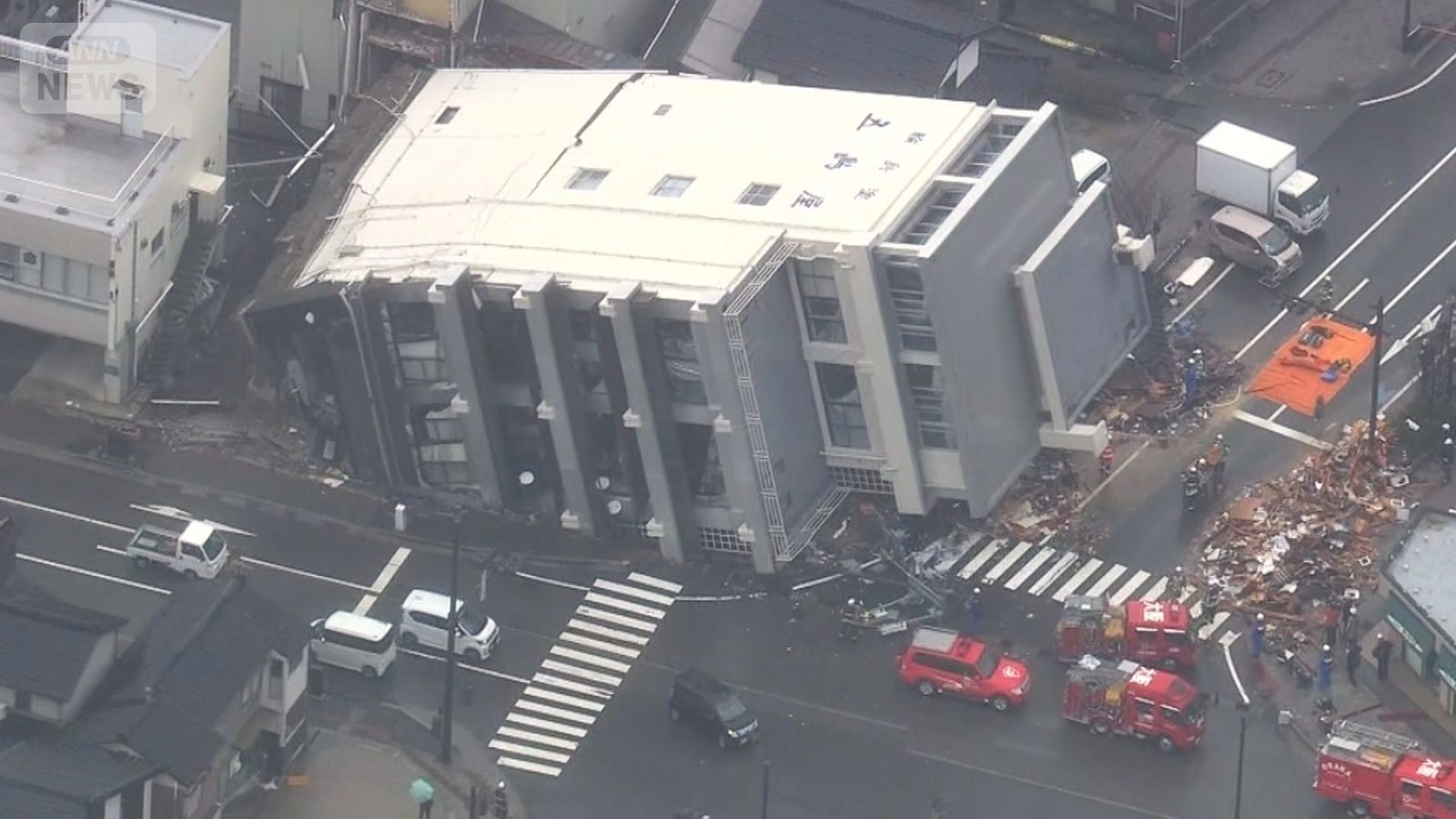
A man whose wife and daughter died when a building toppled onto their home in the Noto Peninsula earthquake filed suit against the state and the building's owner on Thursday, seeking about ¥200 million in damages.
Kenji Kusunoki, 58, ran a home and shop in Wajima that was crushed when the building fell over at its base. The building had piles driven into the ground to support it, and its collapse was the first of its kind in Japan. Marks suggesting a pile had been pulled out remained at the site.
His wife, Yukari, then 48, and their eldest daughter, Shuran, then 19, died before rescuers could reach them. The earthquake struck on New Year's Day 2024 and registered a maximum intensity of 7 on the Japanese seismic scale.
Kusunoki said he sued because a lawsuit was the only way to get the cause examined in detail. He argues the state and the owner knew the building carried a high risk of collapse and left it standing.
“When winter comes, I remember that time and fall apart. A quake will surely hit somewhere again and something will fall, and someone's house will be flattened. I don't want anyone to go through what I did.”Kenji Kusunoki, plaintiff
Why the building fell
A panel of experts at the Ministry of Land, Infrastructure, Transport and Tourism concluded in December that a combination of factors brought the building down. The reinforced concrete structure had seven stories above ground and was built in 1973, before earthquake-resistant design for piles became mandatory in 2001.
When the shaking began, the tops of the piles broke under deformation they could not withstand. The building was long and narrow, and its columns were unevenly placed, so weight tended to gather on one side. That pushed the load onto a single set of piles all at once. The ground beneath was extremely soft, and the building sank deep under its own weight before toppling at its base.
The ministry says it will study nationwide safety measures in response to the panel's report.
Risk beyond Wajima
Hirokazu Kusunoki, a professor at the University of Tokyo's Earthquake Research Institute who surveyed the site and sat on the panel, said buildings put up before 2001 are not automatically dangerous. The risk of a full collapse that harms people nearby does not apply to every such structure, he said.
He did not rule out a repeat. Certain combinations of conditions sharply raise the risk of a building toppling, he said, and no one can state that it will happen only in a particular part of Wajima.
“A building must not fall over. Big earthquakes will come, of course, someday. If buildings are put up properly, at least people won't go through what I did.”Kenji Kusunoki, plaintiff