
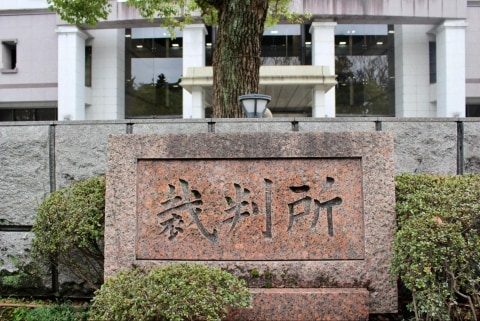
The Kyoto District Court acquitted a 60-year-old former organized crime executive of murdering the president of the company behind the Gyoza no Ohsho restaurant chain, finding that a DNA match on cigarette butts did not prove he fired the shots. Presiding Judge Atsushi Nishikawa handed down the not-guilty verdict on October 16, according to the ruling summary.
Prosecutors had sought life imprisonment for Yukio Tanaka on charges of murder and violating the Swords and Firearms Control Law. Lawyers for the victim's family joined the case and asked for what they called the heaviest penalty the defendant could receive. The court found the crime was not proven.
Takayuki Ota, then president of Ohsho Food Service, was shot dead in Kyoto in December 2013. Tanaka was accused of carrying out the killing.
The butts at the center of the case
The prosecution's main evidence was two cigarette butts found in a passage east of an Ohsho annex near the scene on the day of the killing. Saliva on the butts contained DNA matching Tanaka, and the court accepted that he had smoked them.
It also noted that Tanaka lived in Fukuoka Prefecture and had no connection to the chain, making it hard to believe he would have stopped in that passage in the course of daily life. Finding the butts near the scene "considerably suggested" he was the killer, the court said.
Smoked by him, but where?
The court stopped short of finding the cigarettes were smoked and stubbed out in the passage. A former Ohsho employee testified that the butts were probably not there when they walked the passage the morning before the killing. The court said the witness may have been thinking about work while walking in the rain and that the butts were small and inconspicuous, so the testimony had "limits" as proof.
An expert in fire-cause analysis testified that the way the cigarettes had burned suggested they were extinguished on the wet surface of the passage, and that bringing them in from elsewhere would have been "extremely difficult." The court disagreed, saying that if kept stable in a container, the butts could have been carried to the passage in the same condition in which they were found.
Tanaka having smoked the cigarettes and Tanaka having smoked them at the scene were separate questions, the court concluded. It could not find that the cigarettes were smoked and stubbed out in the passage.
An appeal to the Osaka High Court
The Kyoto District Public Prosecutors Office appealed the ruling to the Osaka High Court on October 29, according to reports.
A former prosecutor, now a lawyer, said the appeal will turn on how prosecutors build their case the second time. The first-instance ruling accepted the DNA match but rejected the link between the butts and the scene, leaving the prosecution to prove that link rather than the identity of the smoker.