
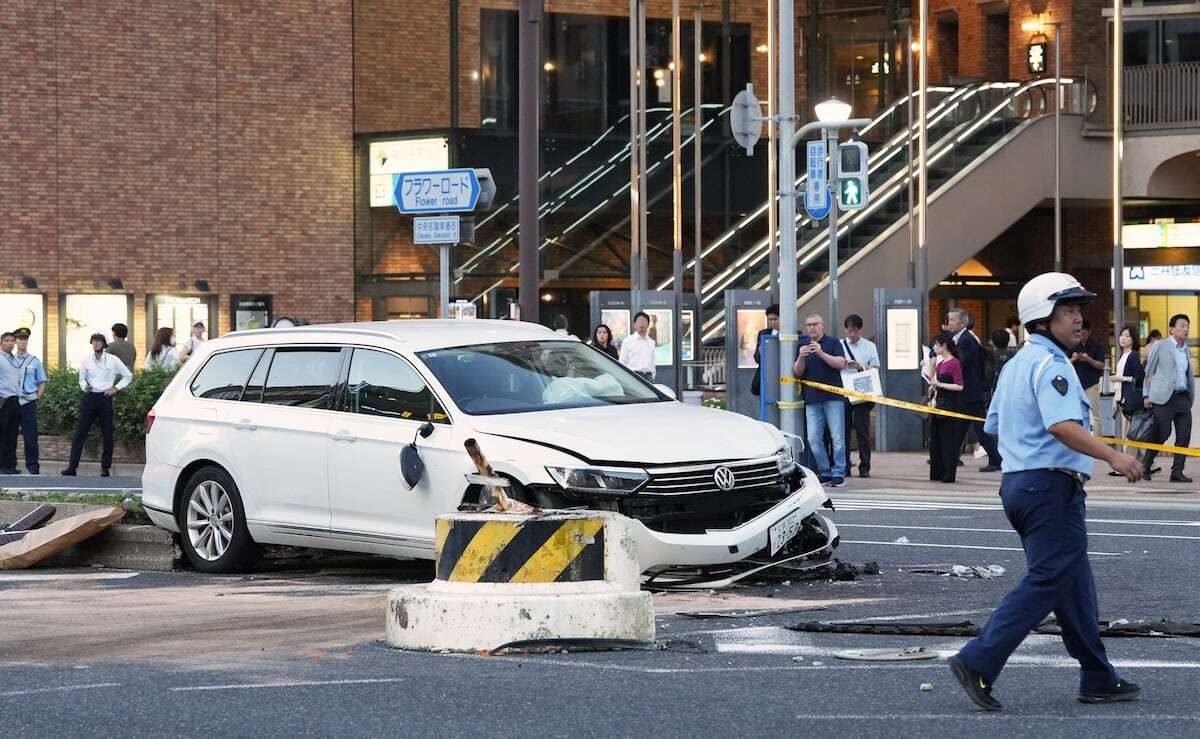
The Kobe District Public Prosecutors Office has begun a psychiatric evaluation of a 58-year-old company executive arrested over a crash that killed a university student and injured two men at a crossing in central Kobe, the office said on Thursday. The evaluation, which will determine whether he can be held criminally responsible, began on Wednesday and is scheduled to run until February 26 next year.
The man, a resident of Kachidokibashi, Tokushima, was arrested on suspicion of violating the Automobile Driving Punishment Act — negligent driving causing death and injury. Prosecutors have not named him.
Investigators allege that around 3:40 p.m. on the first of the month, his car was stopped at a red light at a prefectural road intersection in Kobe's Chuo Ward when it suddenly accelerated for an unknown reason. The car struck a 21-year-old university student from Higashinada Ward, killing her, and injured two men in their 30s and 60s, one seriously.
The man has told investigators he does not remember the crash. "I don't remember. I don't know why I caused the accident," he was quoted as saying.
A passenger in the car told Hyogo prefectural police that the man's physical condition suddenly changed and that the car started moving without warning, according to people involved in the investigation.
The evaluation will keep the man in custody for assessment while prosecutors decide whether to press charges. Under Japanese law, a suspect found to lack criminal responsibility cannot be prosecuted, and the assessment period can be extended with court approval.