
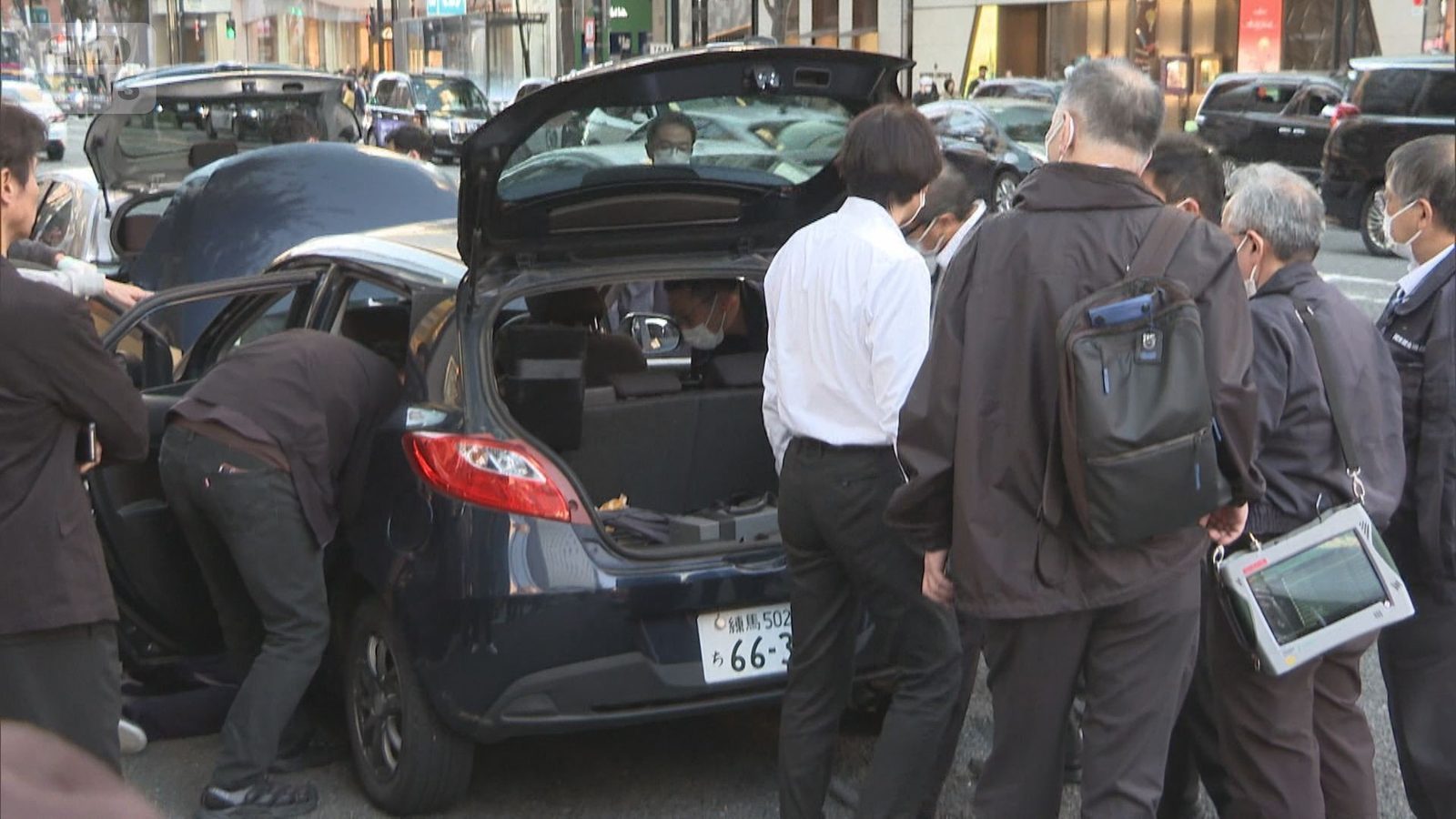
A 31-year-old Chinese national has been arrested in Tokyo's Ginza district on suspicion of emitting radio waves that disrupted mobile phone service, in Japan's first crackdown on a technique known overseas as the "SMS blaster."
Yu Hairong was arrested on the spot on the 7th, accused of transmitting interfering signals from wireless equipment loaded in a vehicle. He denies the allegation, the Metropolitan Police Department said.
According to the department, Yu emitted a powerful signal that temporarily put mobile phones within a radius of at least 500 meters out of service. The phones were then connected to a fake base station and sent text messages.
The messages, written in Chinese, told recipients to restart their phones if they needed to use their cards overseas. They directed users to a phishing site.
Losses of about ¥4 million confirmed
Eighteen victims have been confirmed between January last year and the end of last month, with losses totaling about ¥4 million. All were Chinese nationals, and every case involved the fraudulent use of a credit card.
Many were travelers who may already have left Japan. The Metropolitan Police Department believes the confirmed cases are only a small part of the damage and that an organized group may be behind it.
The technique appears common in China, where it spread across the country from around 2012 and prompted public security authorities to issue warnings. It later surfaced overseas.
Cases reported in at least 17 countries
Toronto police arrested three men accused of loading a fake base station into a car and sending messages that led to phishing sites. A police official said the equipment could reach thousands of devices at once and warned of serious risks to public safety, including interference with 911 emergency calls.
Malaysia has also made arrests, with most cases involving equipment moved by car. In Britain, police arrested a man of Asian appearance at a terminal station accused of sending large volumes of phishing emails to passengers' phones from a device packed into a suitcase.
Damage has been reported in at least 17 countries and regions, including Europe, the Middle East and Southeast Asia.
Up to 30,000 phones offline at once
According to the Metropolitan Police Department, the man arrested in Ginza is believed to have carried out the offenses for about two years. He operated not only in Ginza but in busy districts such as Shinjuku and Shibuya.
Moving by car, he emitted signals at as many as three locations in a single day. NTT Docomo said a single transmission put roughly 10,000 handsets out of service at a time, causing communications failures.