
Japan imports almost all of the raw materials for its chemical fertiliser — urea, ammonium phosphate and potassium chloride — leaving its fields exposed to a single export rule from China. Since the autumn of 2021, China has required inspections on fertiliser exports, and procurement has been at the mercy of international politics ever since.
welzo, a farm-supply wholesaler in Fukuoka with annual sales above ¥50 billion, is trying to solve that problem through research and development. The company handles fertiliser raw materials, horticultural supplies and feed ingredients.
At a research farm run with Kyushu University, welzo is working on a technology that irradiates compost such as cattle manure with plasma so it takes in nitrogen from the air and turns into fertiliser. The company also plans to digitise the know-how of veteran farmers at its group firm Jatt, based in Osaka.
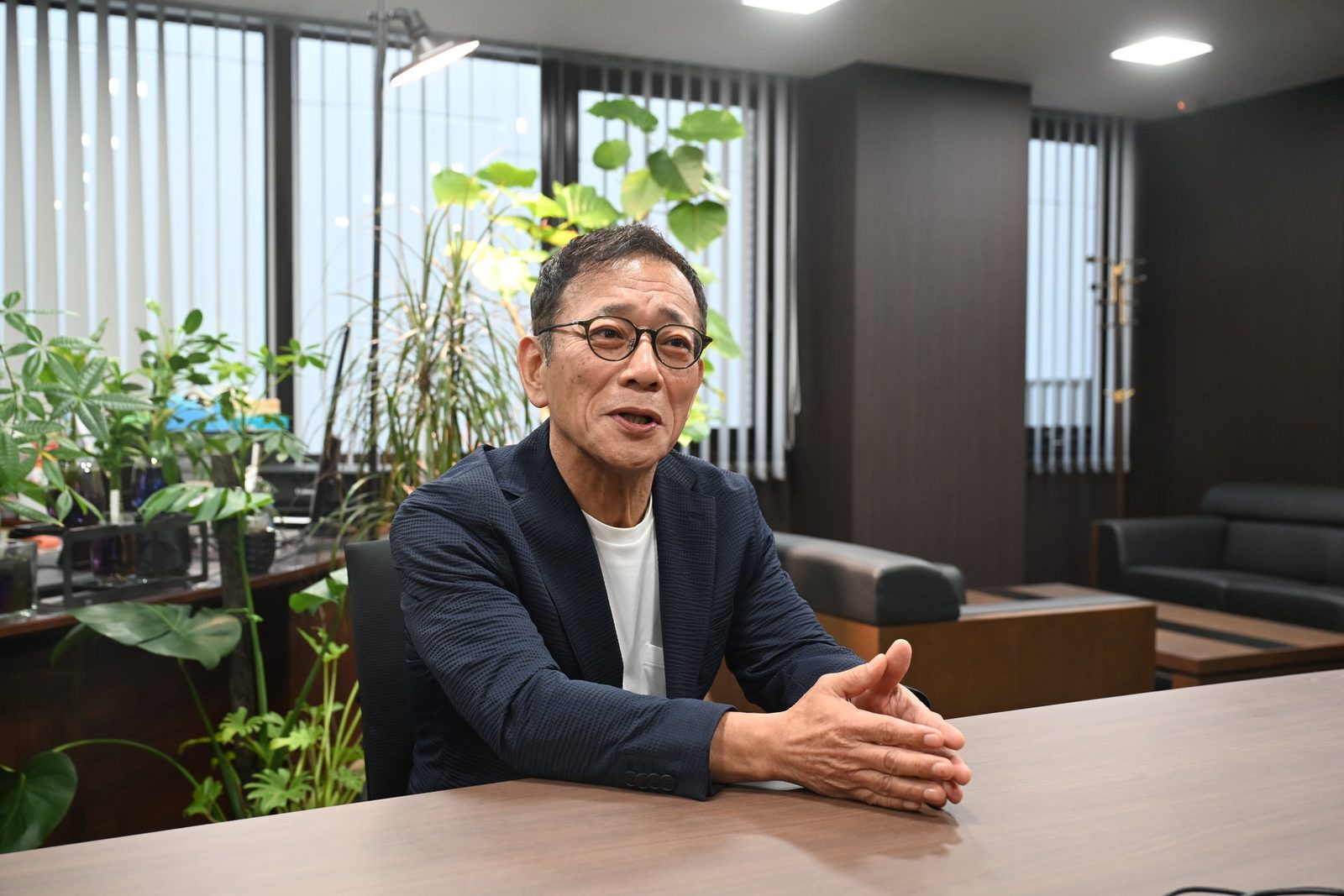
The goal is to reproduce in AI the eye for soil and plants that skilled growers spend decades developing, and to automate light, temperature and water to match what a crop needs. President Yoshifumi Kanao described the plan in an interview.
Fertiliser from the air
welzo buys fertiliser raw materials overseas and sells them to Japanese fertiliser makers. Nitrogen, phosphate and potash are the three main inputs that keep yields up, Kanao said. Large volumes of phosphate come from China, and phosphate rock itself is imported from a limited number of producing countries.
"Now that we have received export restrictions on critical minerals from China, the closest neighbour, Japan will be competing for phosphate rock," he said.
China has restricted exports to keep raw material at home, but some still flows to Southeast Asia and elsewhere. welzo has worked with countries including those in Southeast Asia to keep supplies from being cut off. "Food is close to national policy, so we have a pride in supporting the backbone that is fertiliser," Kanao said.
Since April 2024, welzo has been researching how to make fertiliser from nitrogen in the air using plasma with Kyushu University's Center for Plasma Nano-Interface Engineering. Plasma is a gas given electrical energy so that it separates into electrons and ions.
Kanao drew a distinction between compost and fertiliser. Compost is made from cattle or chicken manure and mixed into field soil; its role is to hold fertiliser components and deliver them in a form plants can absorb. Fixing nitrogen directly onto compost with plasma would give the compost itself fertiliser components, so no separate application would be needed.
Placing an irradiation unit at the outlet of a livestock barn or poultry farm would mean the compost coming out is already fertiliser. "We want to build that kind of circular system," Kanao said.
AI for the veteran's eye
On the farming side, welzo is targeting cucumber cultivation, which grows quickly, to encode the intuition and experience of skilled growers in AI. The aim is a low-cost automated control system that lets new farmers earn reliably from their first year, Kanao said, while raising the floor of Japanese agriculture and opening a path into overseas markets.
The push comes as Japan's farmers age and the home-center market shrinks. welzo has grown sales from ¥32.5 billion to ¥50.1 billion in four years, a rise of more than 50 percent, under Kanao, who became president in 2020.